The CNE was responsible for, between April 10 and 11, about the admission or rejection of the applications of candidates for governorates, deputies to the National Assembly and representatives of legislative councils. Until April 13, the period will be in force for the filing of resources on the admission, rejection or not presentation of the same
On Friday, April 11, the period of applications to choose governors, deputies to the National Assembly and representatives of the Legislative Councils, scheduled for May 25. The process culminated without official information of the CNE in several aspects and with an automated applications fallen for several days, which reduced competitiveness to parties that are identified as opposition.
On Monday 7 the registration, modification and replacement of the candidacies with effect on the electoral ballot began. This process is done in two moments: registration through the automated applications system, on an alternate platform to the CNE website, and the delivery of collections in each of the regional electoral meetings.
The system was enabled to the games from Thursday night, according to several representatives to SuchWhich. That is, political organizations lost almost four formal days to make applications without the agency having given an explanation about the matter. The Application Manual and the information that would be provided on Monday, according to the rector Aimé Nogal, was also delivered on April 10.
“With the system there were stumbling, easy to correct,” said Bruno Gallo, a progressive advanced deputy.
The deputy and electoral consultant Aníbal Sánchez (the change) explained that the data of the candidates and a photo should be loaded – in the case of the postulates to governorates – as well as the government program in a specific format and the application form signed by the candidate and representative of the party.
Parties perform the primary applications and accessions of their allies, once they manage to load the candidates; The government program in a specific format, the photo in the case of governors and the certificate of having complied with art 67 CRBV regarding the … pic.twitter.com/apbn4nmbya
– Anibal E. Sanchez Ismayel (@anibalsanchezof) April 11, 2025
Other organizations faced major challenges. Movement for Venezuelawhich belongs to the unitary platform, denounced that the person in charge to apply – his secretary general, José Simón Calzadilla – was denied the option to create the user in the automated system. In addition, the former deputy appears disabled by the Comptroller General of the Republic, despite the fact that no week and a half ago there was any sanction against him.
The MPV has not been authorized to postulate and appear surprisingly disabled. Here I explain 👇🏼 pic.twitter.com/ntlzdj8ygd
– Simón Calzadilla (@simoncalzadilla) April 11, 2025
The CNE was also responsible for April 10 and 11, to inform about the admission or rejection of the applications and until April 13 the period for the filing of resources on the admission, rejection or not presentation of them will be in force.
To date, the CNE has not disclosed the size of the voting constituencies or delivered data from the electoral registry (which has not been audited). According to Rector Conrado Pérez, for May 25 they are enabled to vote 21,507,162 people, that is, 114 thousand voters more than those registered to vote in the presidential presidentials of July 28 (21,392,464 voters).
The agency has not reported all the charges to choose from, which will be determined from the circuits. It was Minister Diosdado Cabello, during an act of the PSUV, who reported that the National List of Deputies to the National Assembly went from 48 to 50, with the incorporation of the representatives of La Guayana Esequiba.
The CNE issued a series of special standards in 2020 and imposed this national award list in the elections of that year. This contributed to the increase in the number of seats to 277, but electoral experts have insisted that the calculation used is unconstitutional, since it must be done – according to the Constitution – based on 1.1% of the population base, which will yield as a result between 265 and 267 seats.
Who made applications?
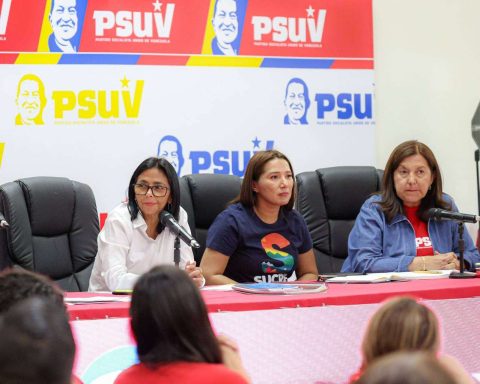
The United Socialist Party of Venezuela postulated its candidates for the system and convened demonstrations to accompany the registration of its candidates for governors –Aunciated on March 31 – in each of the regional meetings.
On Thursday, April 10, the names of the candidates list (national and regional) were made public to deputies to the National Assembly. The general secretary of the party, Diosdado Cabello, reported that the rest of the candidacies to Parliament and legislative advice would be published on the organization’s website next week.
A new time (UNT), founded by Manuel Rosales, was able to apply for races this Friday, although there is no more information about their candidates. The governor of Zulia himself requested on his social networks to be “accompanied” on April 12 to formalize his registration to re -elect “firmly in defense of Zulia.” The meeting will be from 10:30 am on Milagro Norte Avenue of Maracaibo.
Figures such as Henrique Capriles would also have managed to get the disqualification against them to specify a candidate for the National Assembly, through a “unique” name card, until now unknown.
For its part, the democratic alliance was not with unique plates to all charges. In advanced progressive «we opt for partial alliances. In some places we go together, in others not, ”said Deputy Bruno Gallo.
In the judicialized democratic action, deputy José Gregorio Correa said, alliances were achieved in 20 states for the positions of governors, while unit plates were created for candidates for deputies and regional legislators.
For example, in one of the states where there are divergences is Falcón, where the legislator Oscar García was postulated, which has the support of Copei, Change, first Venezuela, First Justice, Venezuela Unida, Popular Will, Unity Vision Venezuela, Republican Movement and Solutions. For the “White Party” and the change was postulated Javier Bertucci, presidential excandidato.
The Falcón State is the genesis entity of Venezuela, an epicenter of great historical events that began the drawing line of what our beautiful nation is today. Falcón is the land of brave and bregening men and women. They have always been leading actors of their … pic.twitter.com/pqlbprky3
– Copei party (@Copei_partido) April 8, 2025
I make public knowledge that #Shark postulates as its candidate for governor in the Falcón state to @Javierbertucciparty head @ElCambiove.
Here we show that with sincere amplitude we can achieve the change that Venezuela needs.
For ad the golden rule … pic.twitter.com/yahvthgdtm
– Bernabé Gutiérrez (@adBernabe) April 8, 2025
Among the postulates to the governorates by the judicialized ad, as reported by the own Bernabé Gutiérrezare:
- Anzoátegui: José Brito, deputy (First Justice).
- Aragua: Luis Eduardo Martínez, deputy.
- Apure: Endryk Polanco, administrator
- Carabobo: Anyelith Tamayo, deputy and National Youth Secretary of AD.
- Amacuro delta: Larissa González, former deputy.
- Falcón: Javier Bertucci, Presidential Excandidato (El Change)
- Guárico: Alejandra Barón, head of Cambiemos in that state.
- Mérida: Alcides Monsalve, former mayor
- Miranda: Negal Morales, former secretary of the National Assembly.
- Monagas: HEMMARYS VALERA, oil engineer.
- Táchira: Juan Carlos Alvarado, Deputy, National Secretary of Copei.
- Yaracuy: Luis Parra, deputy (first Venezuela)
- Zulia: Ely Ramón Atencio, mayor of Rosario de Perijá.
*Journalism in Venezuela is exercised in a hostile environment for the press with dozens of legal instruments arranged for the punishment of the word, especially the laws “against hatred”, “against fascism” and “against blockade.” This content was written taking into consideration the threats and limits that, consequently, have been imposed on the dissemination of information from within the country.
Post views: 292