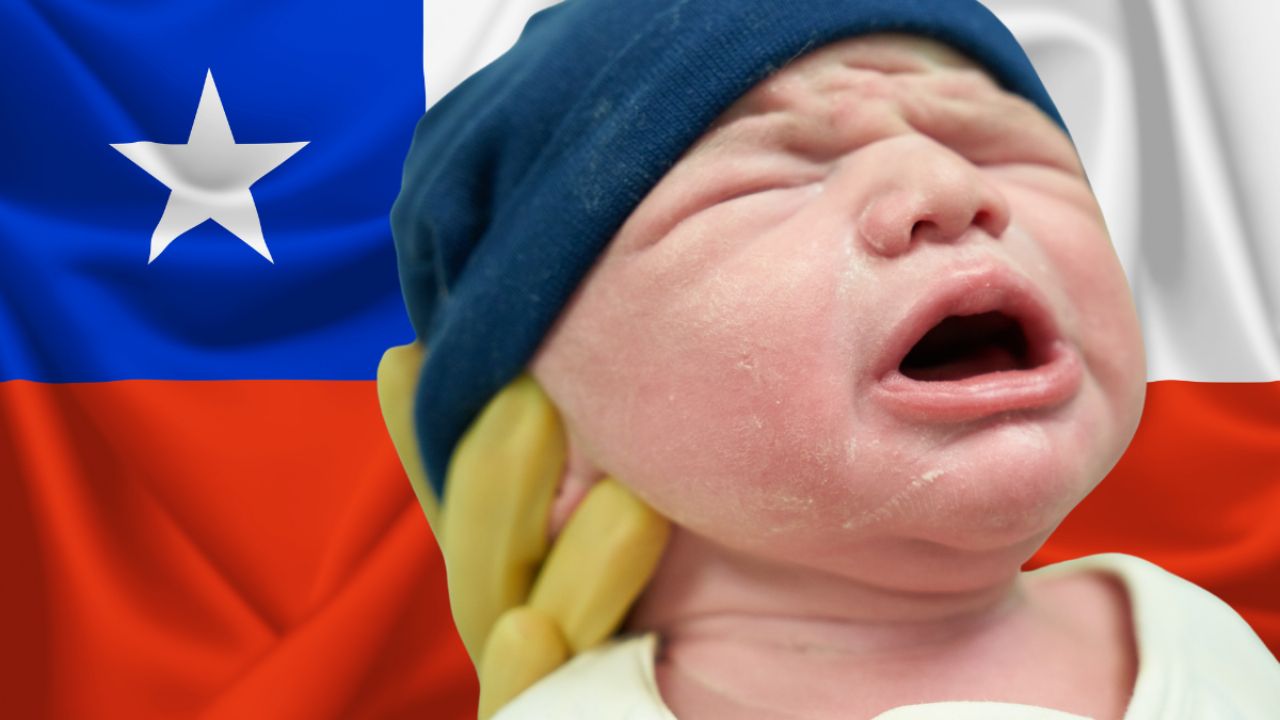
The number of births in Chili It has fallen to historical levels, which generates concern between experts and authorities. According to the National Statistics Institute (INE), the global fertility rate (TGF) decreased to 1.25 children per woman in 2022 and is projected in 1.16 by 2023. These figures place the country in the last positions of the world birth ranking.
This phenomenon was recorded in Chilihas accelerated in the last decade, reflects deep social and economic changes. Delay in motherhood, economic uncertainty and difficulties in reconciling working and family life are key factors in this trend.
The impact of migration
Despite the general decrease in births, a striking fact is the participation of foreign mothers in the birth rate. In northern regions such as Tarapacá and Antofagasta, almost half of the births It corresponds to migrant women, especially from Venezuela, Peru and Haiti. However, studies show that, over time, these populations also tend to reduce their number of children.
The descent in birth is not only a demographic matter, but has direct implications in the development of the country. The lack of generational relief affects the labor market, the pension system and long -term economic growth. “If concrete measures are not taken, in a few years we will face serious sustainability problems,” warns the director of the INE, Ricardo Vicuña.

Measures under discussion
Given this reality, various institutions have proposed strategies to reverse the trend. Among them, economic incentives for families, subsidies for child care and labor conciliation policies are discussed. Some experts suggest that motherhood support systems should be strengthened to guarantee better conditions for those who wish to have children.
Chili It is not the only country with this challenge. Nations such as Italy, Japan and Spain face similar problems and have implemented different policies with mixed results. The question is still open: what model will you adopt Chili To face this demographic crisis?