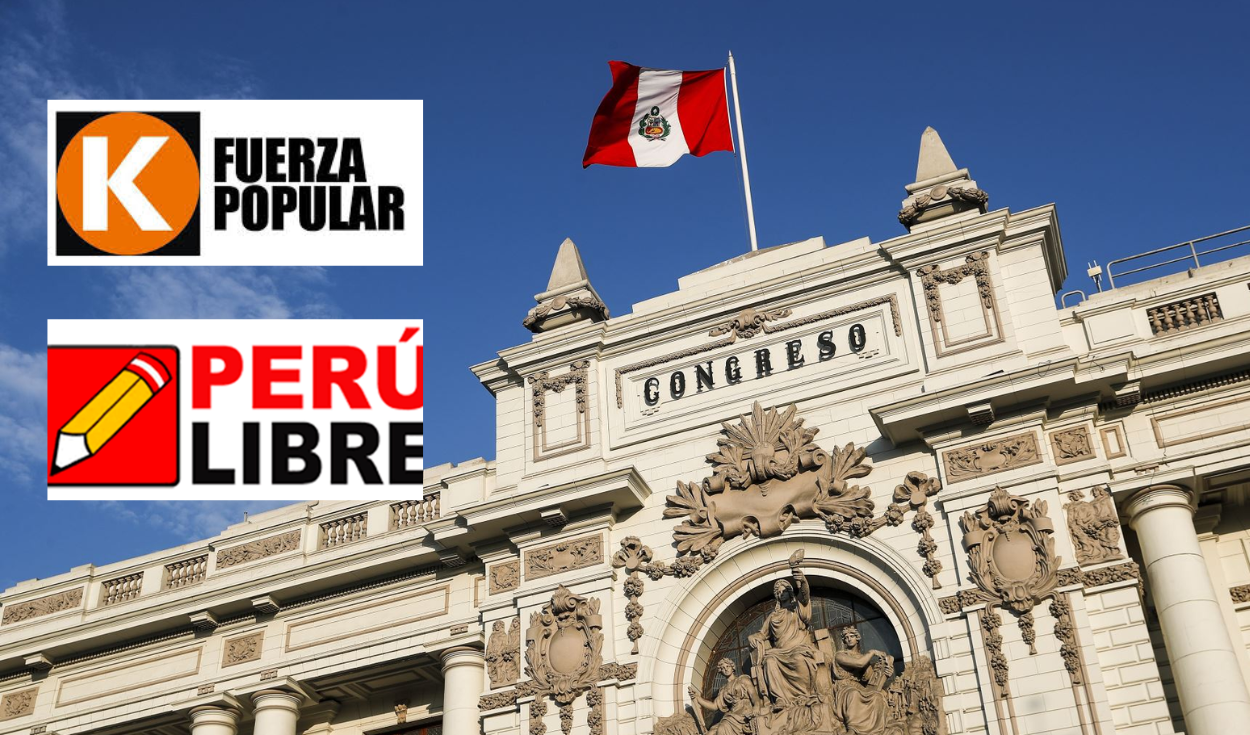
Ratified decision. Despite the warnings of various experts, the Congress of the Republic approved in second vote the modification to the Domain Extinction Law. With 42 votes in favor – among them, those of parliamentarians of Free Peru and Popular Force-, 25 against and 10 abstentions, the norm was finally approved.
The reform proposes to modify the Legislative Decree 1373 to demand a firm criminal sentence as a requirement for the seizure of assets and eliminate the obligation of the investigated to demonstrate the legality of their assets at the beginning of a tax investigation. Currently, in domain extinction processes, the holder must prove the legality of the good, but with this reform that requirement would disappear. Likewise, the initiative proposes to exclude crimes such as corruption, money laundering and organized crime from the scope of the norm, which could benefit politicians investigated as Vladimir Cerrón, Fredy Hinojosaamong others.
You can see: They reveal a new photo of Dina Boluarte’s cell phone: Santo and prints sculpture fill their office
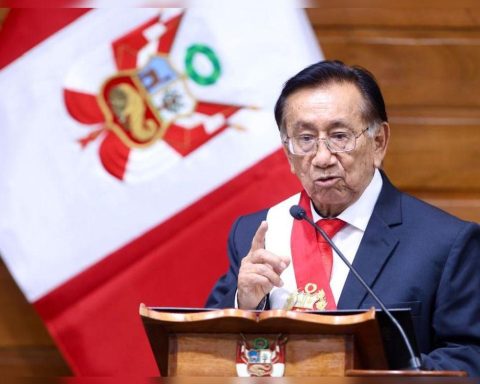
During the debate, the president of Congress, Eduardo Sallejuanahe proposed to vote a previous issue for the project to return to his commission and be analyzed with greater caution. However, the application was rejected by its parliamentary colleagues. For its part, Sigrid Bazáncongressman of the popular democratic block, said that the measure would generate damage against the State: “That the State renounce its ability to pursue these illegal origin of other subjects would be a very serious setback (…)”, said the parliamentarian.
Judicial Power and Prosecutor’s Office opposed reform of the Domain Extinction Law
The eventual approval in the second vote of the modification to the Domain Extinction Law could generate worrying consequences, then warned the Public Ministry. Among the indicated effects are the possibility that people involved in acts of corruption retain goods obtained illegally, as well as a lower capacity of the State to recover these assets. This, in turn, would negatively impact the national economy and discourage investments in the country, contributing to a climate of impunity against serious crimes.
You can see: Jaime Chincha to Dina Boluarte before the unemployment of transporters: “Stop repeating stupidities and get to work”
He Judicial Branch He has also expressed his rejection of this reform. Through a statement, he expressed his concern for the proposed changes, arguing that these violate commitments assumed by Peru in the fight against organized crime internationally. Although they recognize the intention of improving procedures related to the recovery of goods of illicit origin, they consider that the modifications lack technical rigor and could weaken a key tool against criminal activities such as corruption, money laundering and drug trafficking.
One of the most controversial changes is the elimination of the requirement that the defendant justifies the legal origin of his assets. And, as mentioned above, with the reform, it would suffice that the prosecutor present indications of illicit origin, but the extinction of domain would only proceed if there is a firm criminal sentence. This would limit its application and exclude cases related to administrative infractions, such as environmental crimes. In addition, a period of prescription of just five years would be established, which could favor those who seek to hide illegal goods through the passage of time.