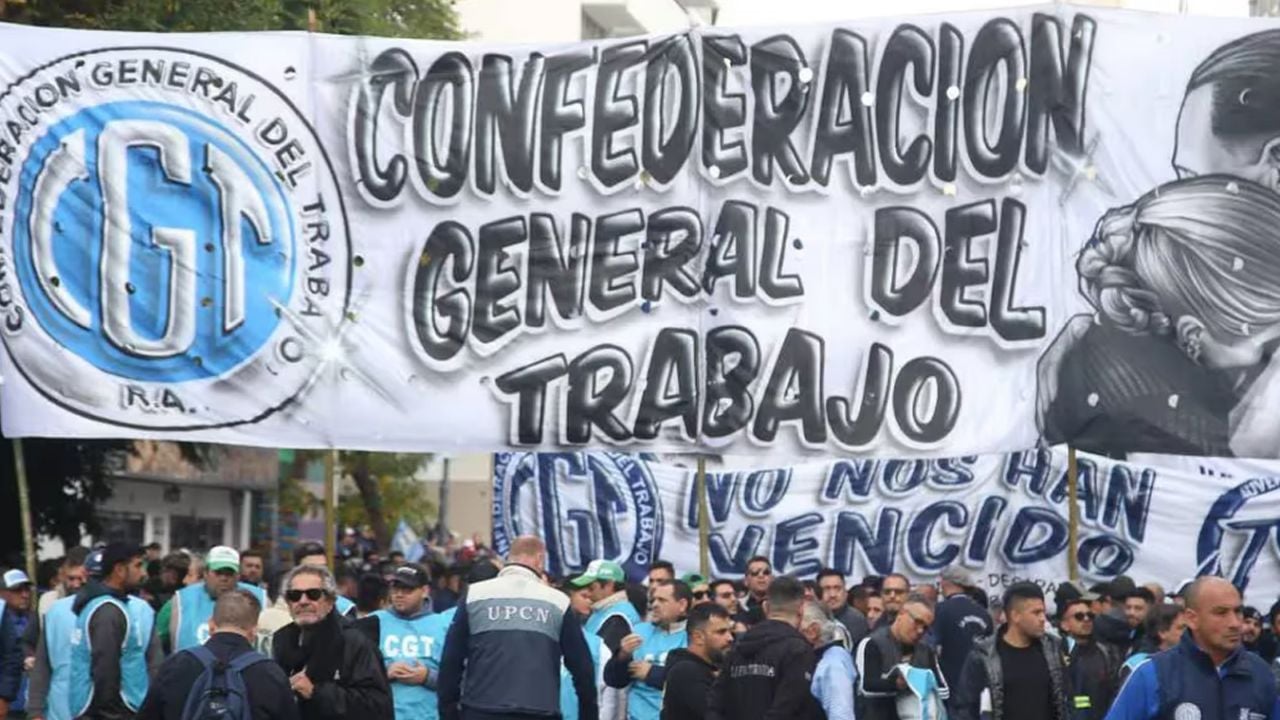
The government of Javier Milei It has generated controversy when openly questioning the General Confederation of Labor (CGT), the main workers of Argentina, in the context of a general strike that took place this Thursday.
According to official statements, the government of Javier Milei It considers that this force measure does not respond solely to labor demands, but is motivated by political interests that seek to destabilize the current administration.
The CGT, historically one of the most influential organizations in the work and political sphere of the country, summoned the general strike in response to what they consider economic and social policies harmful to workers.
Among the main criticisms are the reforms promoted by the government, which include changes in labor laws and tax adjustments that, according to unions, negatively affect the most vulnerable sectors of society.

For its part, the Milei government has defended these reforms as necessary to reactivate the economy and reduce the fiscal deficit. In this sense, the president has argued that the measures seek to modernize the labor market and attract foreign investments, which, in the long term, will benefit all Argentines.
However, these explanations have failed to calm the tensions with the unions, which see in these policies a direct attack on workers’ rights. In a statement issued on Thursday, the government described the strike as a “politically motivated” action and accused the CGT of acting in collusion with opposition sectors to weaken presidential management.

Impact throughout the country
“This strike is not intended to improve working conditions, but to generate a climate of political instability,” said a government spokesman for Javier Milei. These statements have been received with indignation from union leaders, who deny any link with political parties and ensure that their only priority is the defense of labor rights.
The general strike had a significant impact throughout the country, paralyzing activities in key sectors such as transport, education and health. In the main cities, mass demonstrations were carried out that brought together thousands of workers and citizens in support of union demands. In Buenos Aires, the mobilization included speeches of union leaders who denounced government policies and reaffirmed their commitment to the fight for better working conditions.
Followers in Google News And in our channel of Instagramto continue enjoying the latest news and our best content.