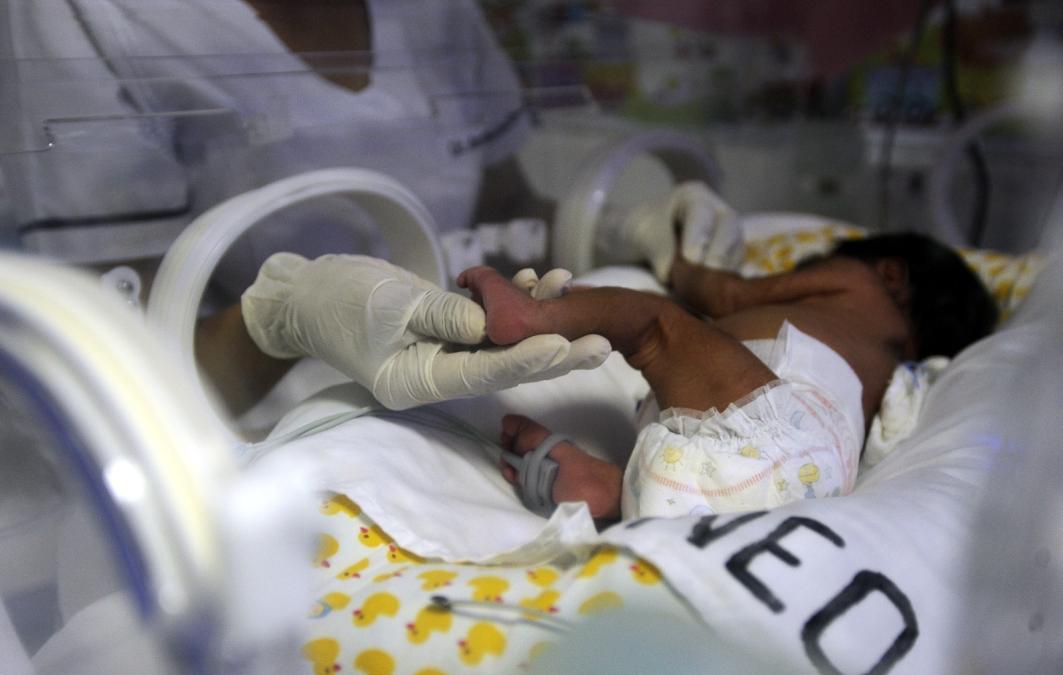
In 2003 women in Bolivia had an average of 3.8 children, but this descended to 2.1 in 2023, which shows a notable decrease in the fertility rate in the country, according to the National Statistics Institute (INE).
The INE director, Humberto Arandia, presented the data of the Demography and Health Survey (EDSA), called fertility and maternity, a look at the demographic transition In Bolivia, which reflects a fall in the Birth rate in the country.
According to the data, in 1998 the fertility rate was 4.2, that is, each woman had, on average, almost five children; in 2003 under 3.8; And in 2023 it fell to 2.1 “What does this imply?that the global fertility rate is at the level Replacement, something that attracts attention because population growth in the medium and long term will tend to slow down. ”
Arandía explained that the population replacement rate must be 2.1 children per woman so that the population does not decide and maintain its size. “An index of fertility below 2.1 It would achieve, in the short or medium term, to make the population age already long term, which decreases, ”Arandia complemented.
According to the survey data, the global fertility rate in the urban area is 1.9, that is, it is below the replacement; while in the rural area It is 2.9, allow it to “affirm that growth in large cities depends largely from the migration of the field to the city and not from the birth of children. ”
The strongest decrease is between 15 and 34 years, which shows that women each They are mothers at later ages. The level of education also affects, since those who have the greatest training have fewer children.
As for the regions, Potosí, Beni, Pando and Cochabamba maintain a rate above of the replacement; while the rest of the departments is below 2.1. Chuquisaca has the lowest, with only 1.8.
If compared to Bolivia with other countries, the gaps have been shortened and now the situation almost equals Brazil and Chile, which have a fertility rate of 1.5.
Marriages
According to the results of the survey, there has not been much variation in the Middle Ages in which Bolivians join as a couple or marriage, which is maintained between 20 and 21 years for women; and between 23 and 24 years for men.
However, the tendency to marriage has decreased. Married women in 2008 represented 37.8% and are now only 27.3%, which means a 10 percent reduction; The concubinage rose from 22 to 26%; those that never married, from 31 to 37%; and the divorced; 6.2 to 7.3%. As for men, never married increased from 40 to 49%, The married decreased from 37 to 24%; and those in concubinage rose from 19 to 24%.
As for people in union who do not want to have children, 17% of women have no aspirations to be a mother and 28% of men either You want to be a father.
About the study
The researcher Jorge Rodríguez, of Cele, noted that, adolescent maternity is being reduced in all social strata, but falls faster in the group of high income. He stressed that this reduction also shows the result of a political decision in the region.
He stressed that this survey will serve to design public policies. In addition, it will allow demographic projections, academic studies that will help deepen the data and meet requirements of other actors in society.
The doctor in demography, Enrique Peláez, indicated that the fall of fertility in Bolivia is almost similar to countries in the region. “An acceleration is seen in the decrease in fertility,” he said.
The Deputy Minister of Promotion, Epidemiological Surveillance and Traditional Medicine, Max Enriquez Nava, stressed that the data show advances in health care, such as the decrease in house delivery, since now more women are treated in health establishments, with qualified personnel.