Miami.- In the midst of the current energy crisis, the dictator Miguel Díaz-Canel announced that Thermoelectric “Carlos Manuel de Céspedes” in Cienfuegos, one of the main energy sources of the country, will be operational again for the summer.
The maintenance continue and in June both units of the Central will be contributing more than 300 megawatts, according to official promises, disseminated in The Presidency page.
Currently, complex works are being carried out in the unit 3 turbine, with an expected synchronization with the national electrical system for the first half of April, providing a nominal power of 158 MW. Unit 4, which also suffered considerable damage, is in intensive maintenance and is expected to enter into operation in the first half of June, with a similar capacity. The reactivation of this plant is crucial to relieve pressure on the country’s electrical system.
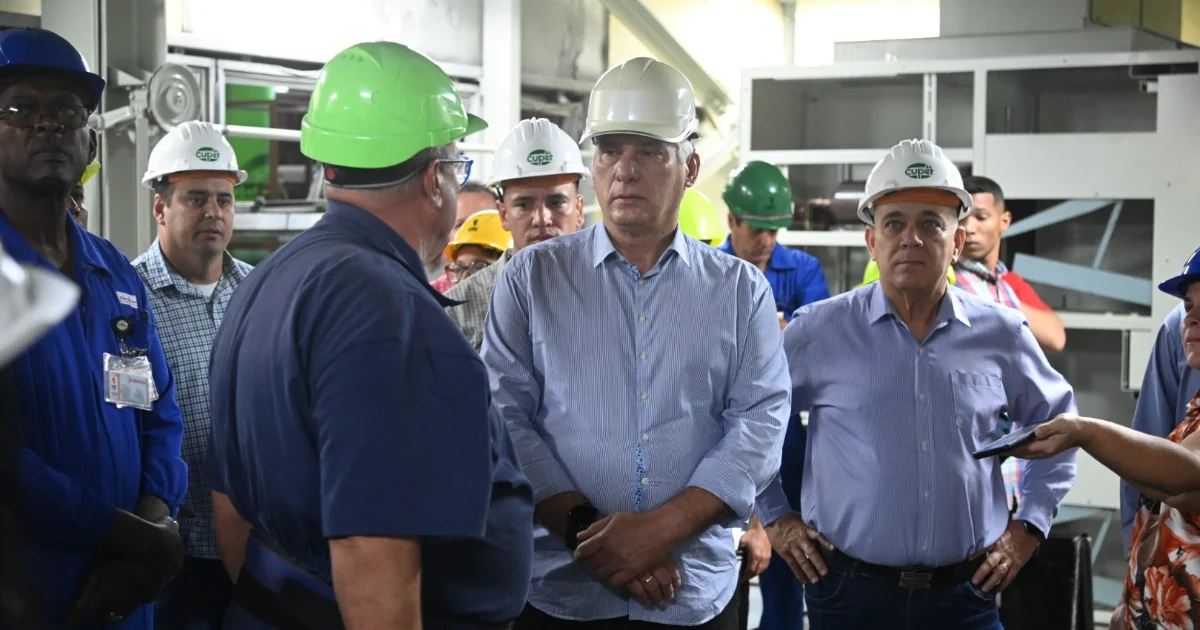
José Osvaldo González Rodríguez, general director of the Cienfueguera company, offered details of everything that has been carried out to try to start within the agreed period.
“Unit number three, when SEN was falling on October 14 of last year, suffered an important breakdown in the turbine, something we have been working on. This unit has been recovering, and the works are completed from the point of view of the recovery of the elements that make up the turbine, and we are now in assembly, ”he said.
“This is an activity that must be completing at the end of March, or the beginning of April. Therefore, we are estimating that this unit, in the middle of April, must begin adjustment and implementation tests, ”added the official on the thermoelectric.
The current situation has led the population to adopt alternative measures, such as the use of coal for cooking, given the instability of the electricity supply and gas scarcity. The combination of obsolete energy infrastructure, difficulties in obtaining fuel and spare parts, have created a challenging scenario for Cuba in energy terms.
The energy crisis on the island has reached critical levels, with blackouts that in some regions exceed 20 hours a day. In addition, the lack of fuel hinders the use of diesel generators as support. At the end of last year, several collapses on the network left the country completely in the dark.
In response, the Government has implemented drastic measures, such as the closure of schools for days and the recommendation that non -essential workers remain at home to reduce energy consumption.