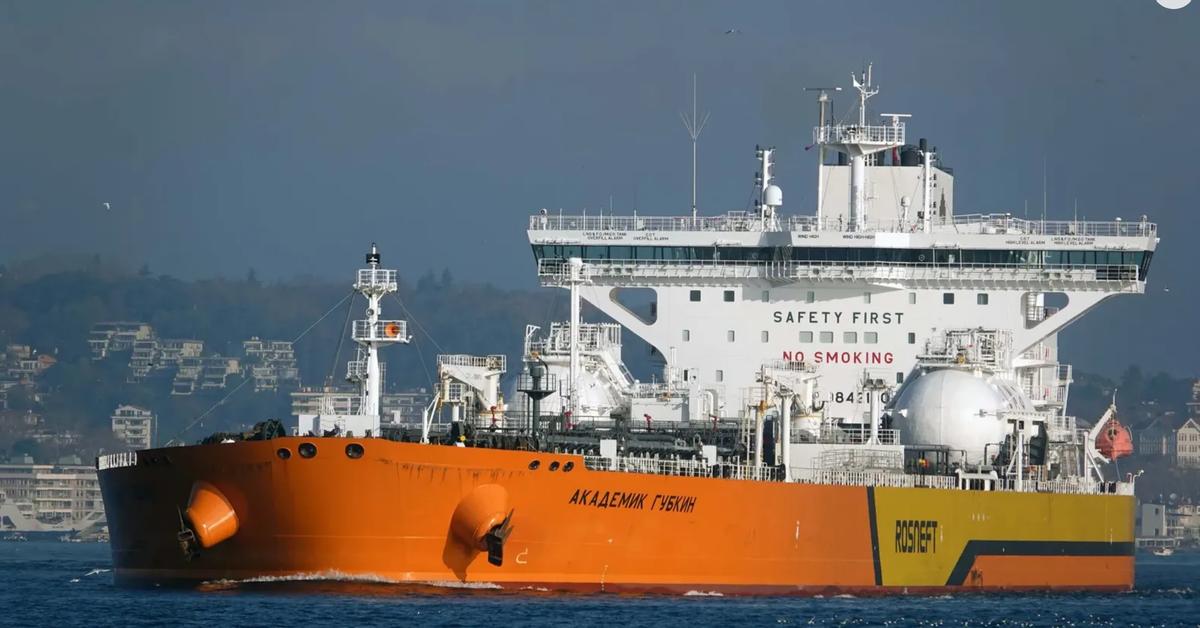
Madrid/The Russian oil tanker Akademik Gubkin He has arrived in Cuba on Tuesday loaded with about 790,000 barrels, valued at 55 million dollars. According to the expert of the University of Texas Jorge Piñón, who tracks his movements, the tanquero from the Baltic port of UST-Luga could download in the Bay of Nepa or in Matanzas.
“This is perhaps one of the biggest and most openwork tanks that arrives in Cuba,” he adds. “It is likely that crude Vilmawhich is now 200 nautical miles north of Cayo Coco towards the east. The transford to other cabotage tanks in the Nape Bay is another option, because it is the safest place throughout Cuba to make a transford, “says Piñón, which emphasizes that the ship is” full almost to the maximum “since the capacity of the Akademik Gubkin It is 818,902 barrels.
This, in the eyes of the expert, “demonstrates the interest of the Russians to export the highest volume of oil under the current sanctions.” The price of the Russian barrel has fallen to $ 69.80 – existing the freight and expenses related to transport – the result of the sanctions for the invasion of Ukraine, and therefore Moscow has to export more to keep its income at the same level.
According to Piñón, the total figure is close to the loan that the Allied country granted in November to the island for the purchase of crude
Where does Cuba take the necessary money to pay Russia for this oil? According to Piñón, the total figure is close to the loan that the Allied country granted in November to the island for the purchase of crude. “On the instructions of our President Vladimir Putin, Russia is willing to provide sister Cuba Emergency Aid due to the current situation in the island’s energy sector. Includes about 80,000 tons of diesel worth 60 million dollars,” he announced The Russian Embassy in a Post Facebook.
The words were from the Vice Prime Minister Dmitry Chernyshenko upon his arrival in Havana to participate in the Russian-Cuba Intergovernmental Commission. The official mentioned expressly the granting of a credit destined to cover fuel and two million more to repair necessary equipment and did so two days after the passage of Hurricane Rafael, which caused important damage to the island just two weeks after the first general disconnection of the electrical system National and one of the Oscar pass.
Cuba awaits the shipment as May water, since it has been dragging energy deficits for many weeks that are around 1,500 megawatts daily, causing more than 30 hours in a rogged in the majority of the provinces. Of these, almost 400 are attributed to fuel shortage for distributed generation, while many others are imputed to thermoelectricas – which generate electricity with national crude -, full of breakdowns and maintenance stops.
In addition, the Cuban tanquero is also directed towards the island María Cristinawhich comes from Punta Cardón, Venezuela. Miguel Díaz-Canel met, precisely, this Monday with the president of the National Assembly of Venezuela, Jorge Rodríguez. The official is visiting the island to, among other things, promote his book, Burned river, At the International Book Fair of Havana, which began last Friday despite the alarming energy situation that led to cancel work and sports classes and activities.
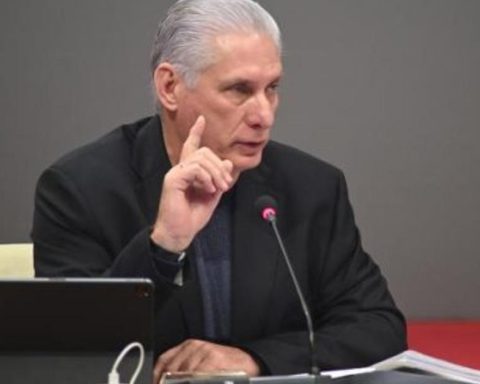
“Today I received Jorge Rodríguez, president of the National Assembly of Venezuela and a great friend of Cuba. We agreed to continue strengthening the relationships between our parliaments, ”Diaz-Canel wrote on social networks. Both signed a memorandum to “promote the cooperation and exchange of experiences between the two legislative bodies” of their respective countries, but there was more rhetoric than concretion.
“Today I received Jorge Rodríguez, president of the National Assembly of Venezuela and a great friend of Cuba. We agree to continue strengthening relations between our parliaments ”
There was also talk of advancing in “the development of the Bolivarian Alliance for the peoples of Our America (Alba) and how to face the brutal blockade suffered by nations such as Venezuela, Nicaragua and Cuba.” But what Cuba needs to hold, lately comes from Venezuela with droppers. Last January, Havana received a historical minimum of oil from its main ally, just 10,000 barrels per day (BPD), which meant 65% less than the previous month, when 29,000 arrived, and about 45,000 BPD less than what was agreed as a monthly average between Hugo Chávez and Fidel Castro in 2000.
For its own survival, Venezuela tries to get a maximum of dollars with the increase in its sales to China, USA, Europe or India, to the detriment of Cuba, which increasingly needs Mexico and Russia to sustain – hardly Electrical system, fuel -based. Meanwhile, it accelerates the construction of the 92 Chinese solar parks without knowing if you can control an internal discomfort that, for now, has not resulted in great protests.