Miami, United States. – One month after announcement of release by the Cuban regimehundreds of people continue in prison, and irregularities in the process have generated concern between human rights organizations. This Monday, Amnesty International denounced in A statement the lack of transparency and the absence of guarantees of full freedom for the releases.
On January 14, the Cuban regime announced the release of 553 people “in the spirit of the ordinary jubilee of 2025” after conversations with Pope Francis. However, Ana Piquer, director for the Americas of Amnesty International, said: “The release process has been full of irregularities and lack of state transparency. Cuban authorities have not recognized the existence of people detained for political reasons. ”
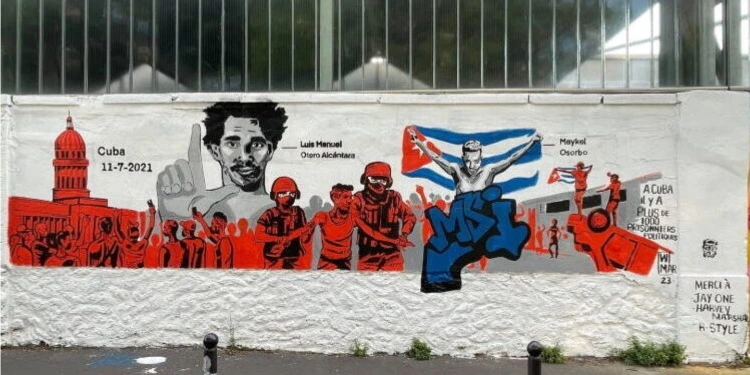
To date, human rights organizations have verified the release of 171 people, many of them related to the protests of July 11, 2021. However, figures recognized as Luis Manuel Otero Alcántara, Maykel Castillo (Maykel Osorbo), Loreto Hernández Hernández , Roberto Pérez Fonseca and Saylí Navarro are still in prison. “They and all people detained just by lifting their voice must be released,” said Piquer.
The releases have been marked by uncertainty and fear of new reprisals. “Hundreds of families have lived between anguish and hope, pending a phone call or notification, without any criteria or element that allows them to know if their relatives are going to be released,” Piquer denounced.
According to Amnesty International, many released have received probation without explanations about their legal situation, which leaves them in a state of vulnerability.
In addition, the Justice 11J organization confirmed that at least 172 people were released, and nine others saw the legal benefits they had previously received. The majority had been accused of “public disorders”, “contempt” and “attack”, crimes that, according to Amnesty, “have traditionally been used by the Cuban authorities to punish the peaceful protest and freedom of expression.”
Emblematic cases reflect persistent repression. The prisoner of consciousness Pedro Albert Sánchez He was released under extrapenal license in November 2024, but he was informed that he had to accept a change to probation or face the return to prison. Subsequently, he was arrested and questioned for visiting the headquarters of the Blanco ladies. Another case is that of Donaida Pérez Paseiro, who denounced that her husband, the Loreto Hernández conscience prisoner, has been pressed with the promise of liberation only if she renounces her activism.
Opposition leader José Daniel Ferrer García, released on January 16 After more than three years in prison, it has also been subject to repression. “Since then, close people They have been threatened to visit him Or have suffered cuts from the Internet service on cell phones that have given it, ”Amnesty International denounced.
The releases seem to have stopped since January 21, coinciding with the decision of the administration of Donald Trump to repeal the biden measures that included the departure of Cuba from the list of sponsoring countries of terrorism. “Alarm the possible cancellation or pause of the release, which would seem to show that people prey for political reasons have been once again used dehumanizing, such as change sheets in a political game, without their lives, their physical integrity and their rights are taken into account, ”said Piquer.
Given this situation, Amnesty International reiterated his call to the Cuban government to free all political prisoners without conditions. “While these releases occurred, political activists and human rights defenders have been arbitrarily detained and have suffered harassment and harassment for their work. The Cuban government must repeal the repressive laws and cease these systematic practices of repression against dissent, ”said Piquer.