After the electoral results of July 28, Nicolás Maduro appointed a commission to write a project for reform of the Constitution
Text: Runrunes
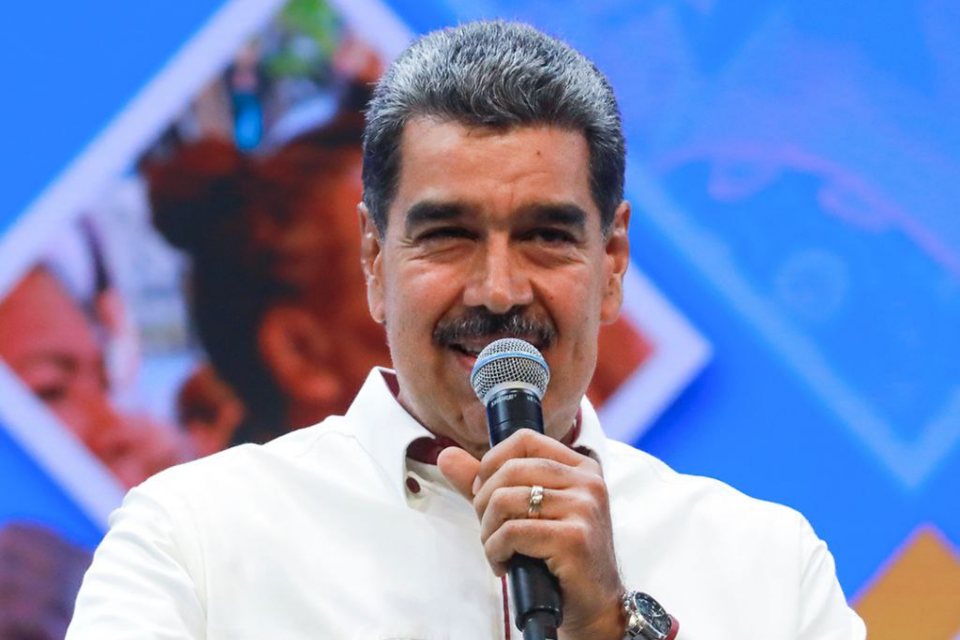
Nicolás Maduro announced a project to reform the Constitution in force since 1999. The announcement arrives after its controversial re -election in July, which triggered protests throughout the country.
In a speech last Saturday, February 15, Maduro appointed a commission, with a period of 90 days, to present a final proposal. This commission is led by the prosecutor imposed by the Constituent of 2017 and ratified by the National Official Assembly, Tarek William Saab and other members such as Cilia Flores, Delcy Rodríguez and Deputy Hermánn Escarrá.
The Chief of the AN, Jorge Rodríguez will also collaborate in the process; the president of the Supreme Court of Justice (TSJ), Caryslia Rodríguez; the president of the National Electoral Council (CNE), Elvis Amoroso; and the head of Defense, Vladimir Padrino, among others.
“I put 90 days for this commission to present a project to our country and I can go to the roads of the country to tell the people: ‘We have great reform,” he cheered.
During the session of the Legislative Power, Maduro urged the commission to initiate a “broad debate” with various sectors of Venezuelan society and expressed his intention that “the whole country be heard.”
He insisted that this document must have “collective wisdom” and integrate all the opinions that adapt to “new realities of the country.” This new change would include changing 80 articles from the current Magna Carta.
More communal power and defense of “fascism”
One of the most important aspects of the “new proposal” for the Constitution is to focus on “communal power.” He affirmed that it should be a fourth instance of power, together with the national, regional and municipal.
According to the Chavista leader, this measure seeks to build a new society based on the principles of peace and economic diversification.
*Also read: Nicolás Maduro proposes to change 80 articles of the Constitution
In addition, Maduro emphasized that the reform must leave “explicit and clear” that Venezuela will not tolerate “any fascist threat, zionist, neo -fascist or any characteristic”, and that these must be punished in a “draconian”.
“Fascism must be crushed with the forces of humanity, of democracy, of truth,” Maduro warned.
A 90 days
The announcement of constitutional reform comes in a context marked by political tension and international skepticism regarding the legitimacy of the Government of Nicolás Maduro.
In the midst of this scenario, Chavismo seeks to consolidate its political project within 90 -day record period, time in which the final document must present.
Maduro was categorical when underlining the urgency of the process, insisting that the country needs a reform that responds to the “new realities” and consolidates its state vision.
Background of the 1999 Constitution
The current Constitution of Venezuela was written by a Constituent Assembly convened by referendum by former president Hugo Chávez in 1999. It was approved on December 15 of that same year with 71 % of the votes in favor, in a day marked by a high abstention and everything that happened in Vargas after landslide.
Since then, the Magna Carta has been a fundamental pillar of the Chavista political project.
In 2017, in the midst of a deep political and economic crisis, a National Constituent Assembly (ANC) was elected with the supposed objective of writing a new Constitution.
However, this instance did not comply with that task and, on the other hand, assumed the functions of the official legislative, then controlled by the opposition, until its dissolution in December 2020, when Chavismo regained control of Parliament.
*Journalism in Venezuela is exercised in a hostile environment for the press, with dozens of legal instruments arranged for the punishment of the word, especially the laws “against hatred”, “against fascism” and “against blockade.” This content is being published taking into account the threats and limits that, consequently, have been imposed on the dissemination of information from within the country.
Post views: 112