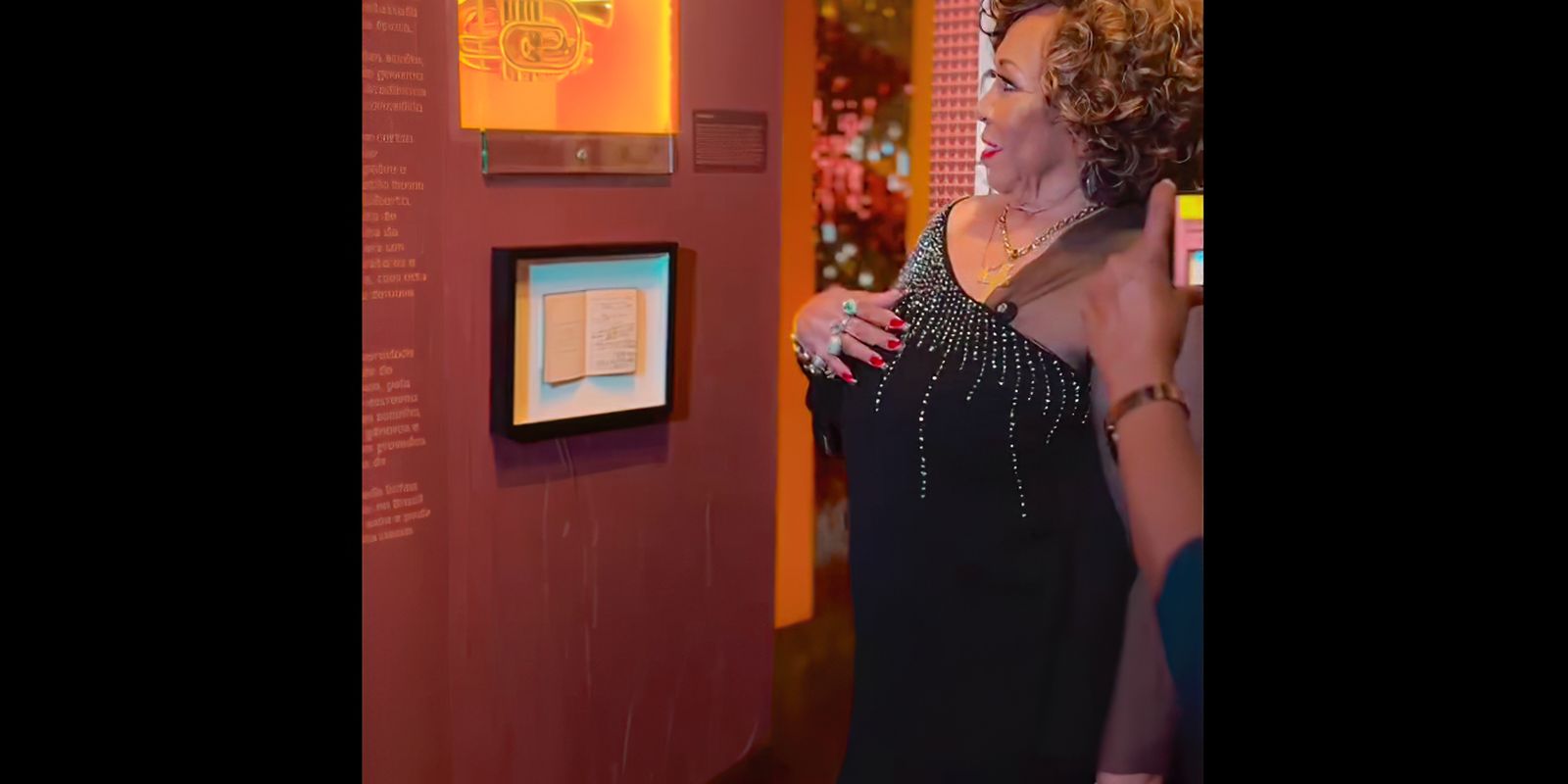
“This exhibition is a luxury! I think no artist deserves to die without having an exhibition of this. ” This is how the Maranhão singer Alcione summarizes the feeling for being the subject of a show in celebration of the more than 50 years of career. And with 42 albums released and a successful trajectory, she tells in an interview with Brazil agency which prepares a record to be released in the first half of 2025.
Baptized from With love, Alcionethe exhibition is available at the Vale Maranhão Cultural Center, in the historic center of São Luís, hometown of brown, with records of presentations by the singer in more than 30 countries, everyday, partnerships and yields a fair tribute to the work of one of one of largest Brazilian voices.
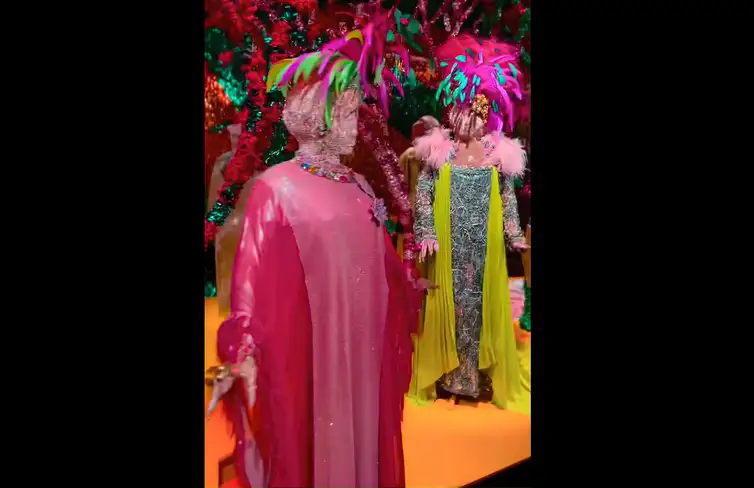
Visitors will be able to see costumes used by brown – Alcione Instagram
“I am very happy for the work of this exhibition, especially for being held in São Luís,” celebrated the singer during an interview at the opening
The script takes the visitor to various versions of the singer: The Sambista’s Steps on the hills of Morro de Mangueira, friendship with the most diverse artists, the trips around the world and the Maranhão culture lover that spins to the sound of bumba mataracas my ox.
Brown became known to the general public with music Don’t let samba die (Edson Conceição and Aloísio Silva), released on the debut album The Samba Voicein 1975. The album also features other striking successes in Alcione’s career: The deaf (Totonho and Paulinho Rezende), and The Voice of MorrThe (Zé Ketti), which inspired the name of the album.
The city of São Luís was where the singer grew up and learned valuable lessons with her father, João Carlos Dias Nazareth. “St. Louis was very important in my life. Because here I learned to live with my friends, the coexistence my father taught me, that my mother taught me. I learned to be, to share and also to unite with my brothers, ”he said.
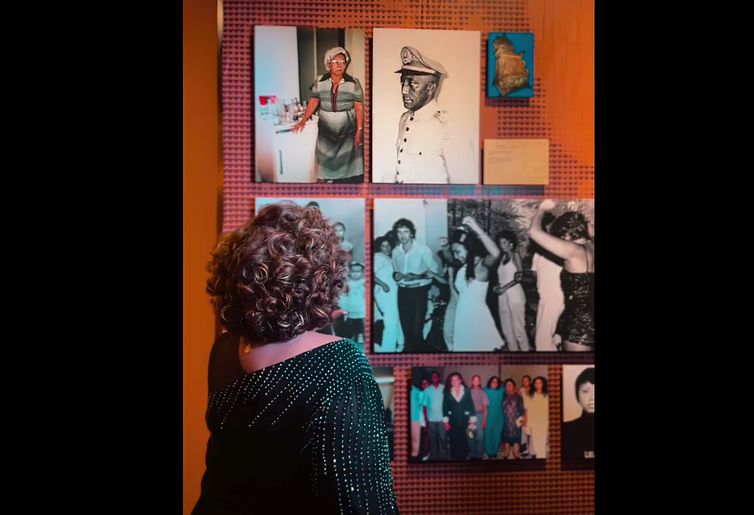
Alcione walks the exhibition that the honoree Alcione Instagram
By the way, it was with the father, master of the band of the Military Police of Maranhão and music teacher, that brown took the first steps in the music world. This walk resulted in a rich Maranhenses trajectory that recorded 42 albums, won 26 gold albums, 7 platinum and two double platinum, as well as DVDs. Alcione was also honored with several career awards, one of them, the Latin Grammy , in 2003 in the best album category.
The fan who wants to know more the life of brown will be able to visit the exhibition until August 30th. The tribute echoes the words of Master Nelson Cavaquinho, in When I call myself longing: That’s why I think like this: If anyone wants to do it for me, let it do it now!

Singer gives exclusive interview to Agência Brasil. AYDAN SOUZA/DISCLOSURE
With mobility difficulties due to a spondylolisthesis, a disease that affects the spine, causing great difficulty in handling the legs, Alcione granted the interview in a wheelchair. The “feature” was used by the singer to rest after walking throughout the exhibition space.
Follow below the chat Brazil agency With the singer, at the opening of the exhibition.
Brazil agency – You’ve seen the exhibition here. What did you think?
Alcione- It’s a luxury, this exposure is a luxury. It is a milestone in my life. Very grateful, very happy for that, a lot. I liked it too much!
Apr – It is a walk through memory …
Alcione – It is a walk through my life, walk through the memory of us. All. My family, my work, my whole life.
Apr – So, coming back to your career, your life, you started here at the Portuguese Recreational Literary Grêmio. How was that? Are you alive in your memory?
Alcione – It is still. I remember my father’s orchestra was playing. And my brother was also from the orchestra, he was a trumpeter, Ubiratã. That’s when the singer of our orchestra was hoarse, he can’t sing that day. Then this brother said, “Look, call Alcione that Alcione sings straight.” And my father: “Yeah? Yeah!”. So I went to sing: (humming) ‘when I saw me pass by me white dobs’ and I liked Ângela Maria, Dalva [de Oliveira]. Then my God, the dancing people stopped and began to applaud me. And then it became a show. From then on they started asking for my father’s orchestra with me singing. Then I got a taste.
Apr – And what was it like to be a woman in this universe? Did you break many barriers to assert yourself with your power?
Alcione – And truth. As I said, woman didn’t sell album, right? The first woman to sell a lot of album was Clara Nunes. And then, at the time, she sold 100,000 records. Then came Maria Bethânia, with a million. And then I entered the play. Me, Bete Carvalho, all of us. We started to make the competition in the square. And that’s it, there was the space of the woman.
Apr – Today, new generations listen to more music on the internet, on streaming. In the past, we had the radio, right?
Alcione – And truth. Radio has always been the most important transmitter in Brazil. I still think to this day. Radio is very important. The radio takes the news anywhere. Anywhere, in the woods, I don’t know where. There in the Amazon, the guy has his rack. And you’re listening to the radio. Radio is very positive in the life of the Brazilian.
ABR- Rio de Janeiro became your home. You have a very strong relationship with the city, with samba and the hose. Last year, even you were honored being a plot. How was this experience of being there on the avenue being honored?
Alcione – This is a very strong thing. You being honored by your school is a responsibility. They did a very beautiful job. The black voice of tomorrow It was the name of the plot. It was very beautiful. I felt super honored, super honored. Our Lady! It was a unique experience.
Apr – You also have another passion, which is the hose of tomorrow.
Alcione – That one I founded. I created the hose of tomorrow. My children. Today they are already from Mangueira Grande. They are all on the Big Mangueira battery. Others are room masters, others … Even our drum queen, Evelyn, she was from the Mangueira do Tomorrow.
Apr – It is important that you can give the possibility of young people, youth, develop their potential …
Alione – That’s it. Create tomorrow’s hose. How wonderful!
Apr – Leaving the river and returning to Maranhão. How is St. Louis in your life?
Alcione – São Luís was very important in my life. Because here I learned to live with my friends, the coexistence my father taught me, that my mother taught me. I learned to be, to share and also to unite with my brothers. My father once took a broomstick and broke his leg like this. He said, ‘Are you seeing this broomstick? I can break one ‘. Took two [pedaços] and couldn’t. ‘If you stay together, it will be like this broomstick. No one will separate you ‘. My father was like that.
Apr – When you are in São Luís, do you have a favorite place?
Alcione – Here in São Luís I really like going to the beach, looking at the sea. There is very good thing here in Maranhão that is you already looking at the sea. And where you have a Creole drum too. I love drum. Creole drum.
ABR- Maranhão is very strong, right? Culturally.
Alcione – It’s very ancestral, it’s very Maranhão. No one has this drum in the world, just us.
ABR- And food? What is the favorite food here?
Alcione – Cuxá. Cuxá rice, fried fish, shrimp pie. Chibé with water flour, chibé with jabá.
ABR- It’s been five decades since you left São Luís to Rio de Janeiro. In this interval you built a super victorious career with an eclectic audience of all age groups. How do you see this?
Alcione – I think it’s a matter of repertoire too. I always had that connection with everyone. I always enjoyed talking on stage. The public likes to know what I have to say. Whatnot. These my paste, they like it.
Apr – People feel very close. This energy makes people feel like they were from your home …
Alcione – That. That is the intention. Everyone gets close.
Apr – What moments of your career you think are highlighted, that were remarkable? What would you highlight?
Alcione- To tell you the truth, I think it was when I sang ‘Don’t let samba die‘. This song came to score. When I heard this song, I said, ‘Guys, I’m going to crack Brazil in the middle with this song.’ AND Don’t let samba die It was practically that showed my career. From then on the composers all wanted to give me music. And I just wanted the good one. And it was good. Thank God, I always had my poets to give me the good music to sing.
ABR- You also give strength to the new generations.
Alcione – For sure. It is very important. It is very important to have a generation there writing well.
ABR- You have to have someone to talk about, right, be the voice of these people…
Alione – I’m not the voice. There are other artists. Gilberto Gil, I know he also magnifies a lot of his composers. Caetano, you know? There are many artists, singers, singers, who praise the composer. They like the good composer.
Apr – Recently you reported an episode of racism you have suffered, how do you see this issue today? The importance of talking about this, of fighting racism?
Alcione – And truth. This lack of culture. So much so that I suffered racism and countered on the spot. Sometimes today it is difficult for a person to be racist with me. First because I have a drum face that dawns, my son. Okay? So, I don’t go well there to send a person to that place. I won’t make myself because I’m black for anyone. It’s true?
Apr – Have you taken a balance of these 50 years of career? What would the Alcione today say there to the brown that was starting?
Alcione – What would I say to the one that is starting? Try to study. Try to know in depth the works of the composers. Give importance to those who are starting. Mainly also give importance to the lyrics of the songs. Thank God I saw myself on this path.
Apr – Last year there were many performances, Municipal Theater, had DVD. This year do you have any projects planned?
Alcione – What am I going to do this year? I have foreseen a record for this year. In the first semester.