Despite being an exportable and high demand ruble in the domestic market as a means of cooking, given the energy crisis, the production of vegetable coal is not always accompanied by success, especially if the contractor is the State.
The Tunal Municipality of Manatí, the small rural community of Las Carboneras, once a prosperous enclave of vegetable carbon producers, is now a single place for a few coal ovens. The inhabitants of the hamlet, of just ten homes, were forced to emigrate to suburban areas due to the economic crisis.
A report published this Friday in the diary digital Newspaper 26, From the province of Las Tunas, it tells the story of a carbonera community coming to less and a generational tradition that will surely be interrupted by the diaspora of its carriers.
A region come less
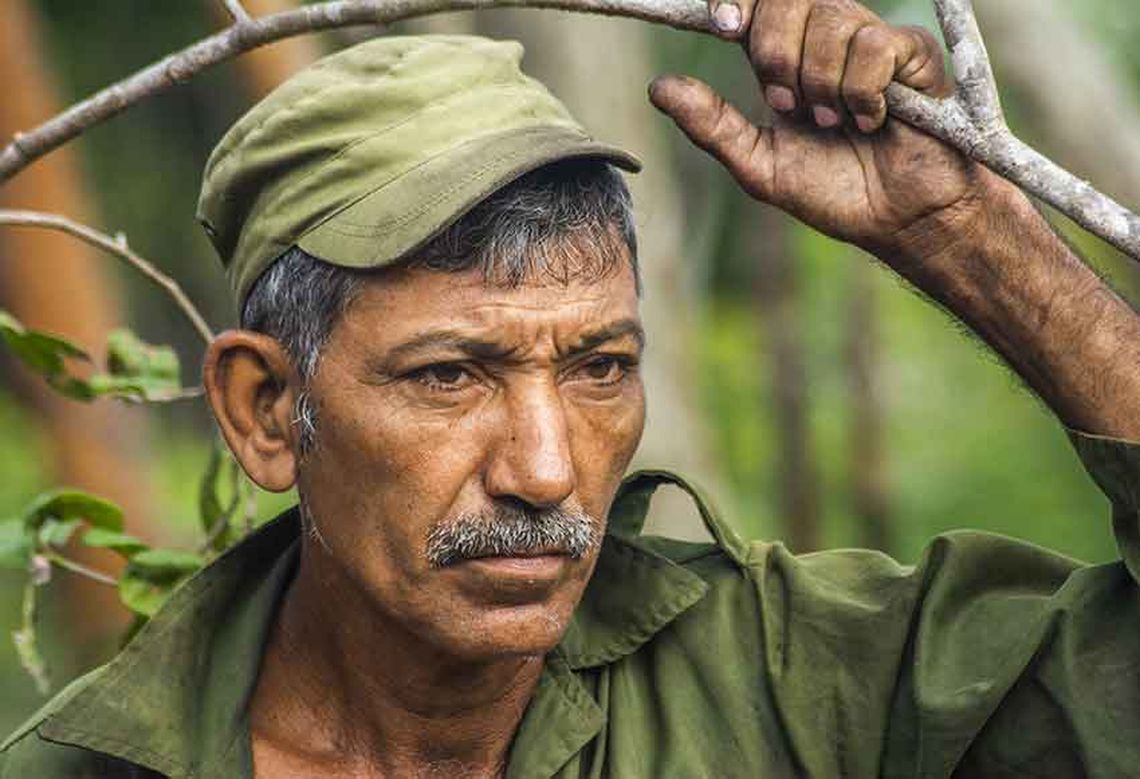
Under the title Las Carboneras, when tradition is broken, The material quotes the testimonies of Enrique Pérez Rojas, a manaten coal who learned the work at nine years from his grandfather.
“There is nothing left here. There was no choice. People had to go, ”Pérez Rojas told the press about the process of dismantling the town.
By turning it into a circumscription of Puerto Manatí, the town lost its own school and the cellar, forcing schoolchildren to walk kilometers to go to classes, because there is no transport in the area, and return home at night through lonely marabuzales.
Without access to basic services, and with difficulties in obtaining food, the inhabitants began to leave their homes in search of better opportunities in the municipal capital of Manatí.
“We stopped receiving the chicken, the mincemeat… and the neighbors began to leave one by one. They took the doors, the windows, what they could, and grabbed for Manatí, to try to survive. I was the last to leave. I added more than 30 years and all I know is to make coal, ”said the peasant.
As if that were not enough, he was a victim of the theft of his animals and the threat of criminals. His wife became ill of her nerves.
Maintain tradition
Despite desolation, some coals refuse to let tradition die. Enrique, at 50, travels daily 12 kilometers by bicycle to work in his ovens, carrying even the necessary land sacks to cover them, describes the report of the Newspaper 26.
For his part, Ramón González Ramírez, another coal of the missing community, also clings to his trade, despite the difficulties in getting firewood and low wages.
Javier Pérez Sánchez, director of the Base Business Unit (EUB) Agroforestal Manatí, recognizes the importance of rescuing coal production, especially in a context of energy shortage. However, it admits that resources are limited and that the prices paid to producers are not enough to cover their basic needs.
Non -competitive state prices
“We start paying the kilogram of coal at 4.00 pesos, then we climb to 8.00 and now it is 15.00. We know it is not enough. They need more and we intend to raise it to 22.00, and we are still below the prices governed by the street. The sack would come out at just over 500.00 pesos, ”he counts.
“The competition is very hard because the sack in a clandestine way is almost a thousand pesos, and in some places that cost exceeds. We are doing studies to favor producers taking into account our possibilities. They integrate the heritage of the forest and whenever there is fuel are supported by the shooting of land and firewood. Right now we cannot give them anything, “said Pérez Sánchez and admitted that” there is no longer a way to recover the community; It only remains to promote production with better rates. ”
MSME DE ARTEMISA exported more than 400 tons of coal in less than a year
Banking and non -covered needs
Meanwhile, Albero Seguro Cruz, secretary of the agricultural, forestry and tobacco union in the municipality of Manatí, refers to the basic needs of the coal. “They ask for clothing, shoes, files… they are not any worker. To be here side by side with the pests, mount in, means means of protection; And we can help them very little. ”
In parallel, the coals are victims of the will of modernization of the government, which in forced marches began in August 2023 the so -called banking process.
“Something that hits them a lot is banking. We pay them on card and have no way to get the money they need at once. When they go to the bank sometimes they only give them a thousand pesos or less, ”says the trade unionist.
Although local authorities express their willingness to support coal producers, the future of carboneras is uncertain.
The weed continues to advance on the ruins of the houses, erasing the last vestiges of a community that was once prosperous. The tradition, maintained by several generations, has been truncated and with it a valuable cultural and economic heritage of the Tunas is lost.
“The tradition has broken, it is very hard not to see the fruit of so much sacrifice,” Pérez Rojas said heavy.
Exports
Since the first decade of the current century, Cuba exports charcoal to Europe from Marabú processing and other invasive species.
Most of the coals and woodcutters in Cuba are independent, some work per season and others integrate agricultural cooperatives or state agricultural companies.
Among the provinces with the most boom in the activity are the central Cienfuegos, Sancti Spíritus, Ciego de Ávila and Camagüey, and the Oriental Holguín.
The main destinations of exports are Spain, Portugal and Türkiye, and also Canada and Nations of the Middle East.
Cuban vegetable coal, known for its high energy value and purity, occurs mainly from Marabú wood, an invasive plant that occupies large extensions of fertile land on the island.
Its use not only generates income, but also contributes to the recovery of land for agriculture and livestock.
The Cuban government has promoted the production and export of plant coal through state and cooperative companies, providing technical and logistic support to producers.
Pitfalls
Despite the potential of the sector, the production of charcoal in Cuba faces numerous challenges. Fuel shortage, spare parts and other basic resources hinders logistics and transport of wood and coal.
Low wages and difficult working conditions also demotivate producers, many of whom choose to abandon the trade in search of better opportunities.
On the other hand, the lack of access to financing and the delay in payments hinder investment in new technologies and improve working conditions.