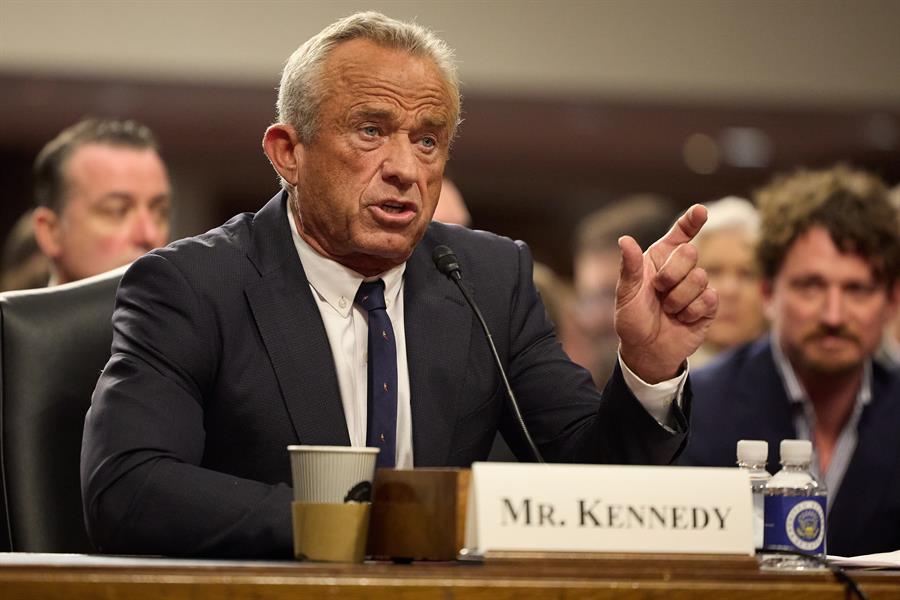
The Senate confirmed Thursday by a narrow margin the nomination of Robert F. Kennedy Jr. to hold the position of Secretary of Health and Human Services of the Trump Administration. The final vote was 52 to 48.
Senator Mitch McConnell, who overcame the polio in his childhood, was the only Republican who opposed Kennedy and voted against. The Democrats were unanimous in their opposition to Kennedy.
In a statement about his decision, McConnell talked about his experience with the disease and said that “he will not tolerate the proven priests again.”
“Mr. Kennedy failed to demonstrate that he is the best possible person to direct the largest health agency in the United States,” said McConnell.
“When assuming the position, I sincerely hope that you choose not to sow more doubts and divisions, but to restore confidence in our public health institutions.”
Kennedy’s confirmation comes after months of controversies and debates, largely focused on their previous comments that question the safety and efficacy of vaccines.
Kennedy, an environmental lawyer without experience in health administration or medicine, will now supervise a network of agencies that provide medical coverage to millions of Americans, regulate the food industry and respond to global health threats.
The White House Secretary, Karoline Leavitt, said that President Donald Trump is expected to sign an executive order that establishes a “Make America Healthy Again” commission.
Trump hugged Kennedy during the electoral campaign after the most famous Democratic Dynasty rod in the United States left his own independent candidacy for president and supported Trump.
Shortly after the choice, Trump chose Kennedy to direct the HHS and promised to let him “go crazy” in health.
During his confirmation hearings, Kennedy was questioned about his statements about vaccines, including their unfounded ideas that linked them to autism.
In a change of previous statements, Kennedy expressed his support for vaccines against polio and measles. He told the legislators that he was not “against vaccines”, but “in favor of security.”
However, he still refused to say that vaccines were not linked to autism or that COVID-19 vaccines saved lives.
But the comments seemed enough for some skeptical republican senators to put on their side.
Trump and Vice President JD Vance also called the senators to support Kennedy.
Republican senator Bill Cassidy, a long career and defender of the vaccine who fought openly against Kennedy’s nomination, said he received several Kennedy commitments, including meetings several times a month and a notice prior to Congress if the HHS plans to search some change in vaccination programs.
Republican senator Susan Collins, from Maine, considered another decisive vote, announced at the beginning of this week that I would vote for Kennedy after raising concerns about the Trump administration directive so that national health institutes cut the support for health research In universities. (Policy has been temporarily blocked by a federal judge). “He said he would examine them again and seemed to understand,” Collins said about Kennedy.
The senate minority leader, Chuck Schumer, a Democrat for New York, had made a final call to his colleagues shortly before the vote to oppose Kennedy. “A vote to confirm Mr. Kennedy is a vote to make the United States get more,” said Schumer.