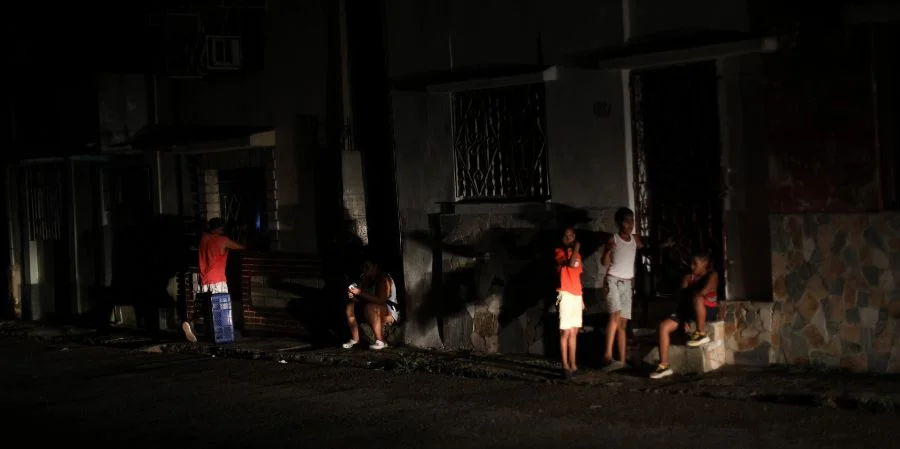
Miami.-The Cuban population will experience electricity cuts today that will affect up to 57% of the national territory simultaneously, has made known A report of the Electric Union of Cuba. For this Wednesday, an estimated 1870 MW deficit affectation is projected, the maximum recorded so far from 2025 and one of the highest in last two years.
The crisis of the electroenergetic system in Cuba has intensified due to the recent operation output of Unit 1 of the Thermoelectric Central (CTE) Lidio Ramón Pérez, known as Felton, located in Holguín.
Electric union (UNE) reported that unit 1 of Felton He presented a breakdown in the generator cooling system, detecting an internal leak that represents a high risk for continuous functioning. Therefore, a mandatory intervention is required that implies cooling the turbine for seven days before proceeding to the disarmament of the generator’s housing and locating the failure for its solution. It is estimated that the unit will be out of service for approximately 20 days.
This situation aggravates the already difficult conditions of electricity generation in the country, eliminating the hopes of a reduction in the blackouts in the short term. Act some regions only have electricity supply for four hours a day, while Havana suffers daily cuts of up to five hours.
This situation has generated social discontent and has led to protests in various locations. The lack of electricity not only affects domestic activities, but also has a negative impact on key sectors such as health, education and industrial production, deepening the economic and social crisis that the country is going through.
The Felton had been disconnected on January 30 for a ten -day scheduled maintenance and operated again on February 7, but was only in operation for four days before the new fault.
This plant, whose unit 2 suffered a fire in 2022 and since then is in repairs, is, together with Antonio Guiteras, one of the main sources of energy generation in the national electro -energy system. The energy crisis has been caused by the aging and deterioration of the electrical infrastructure