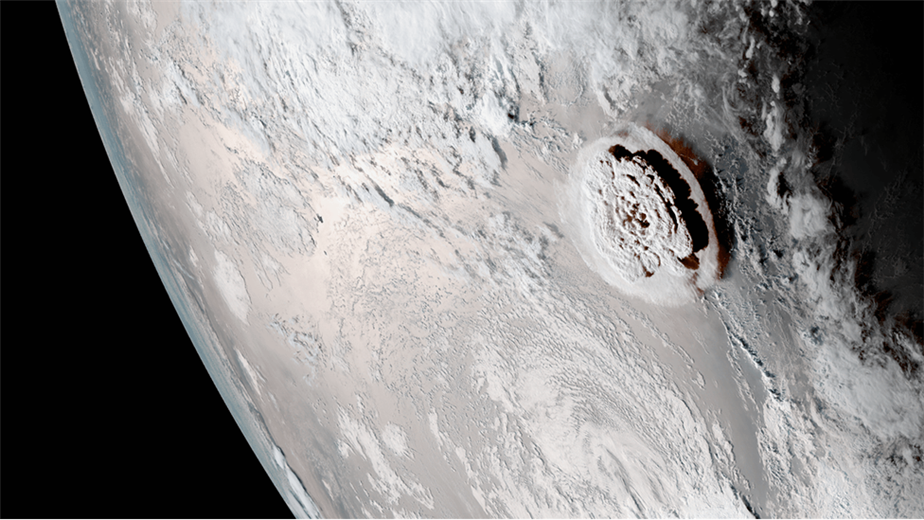
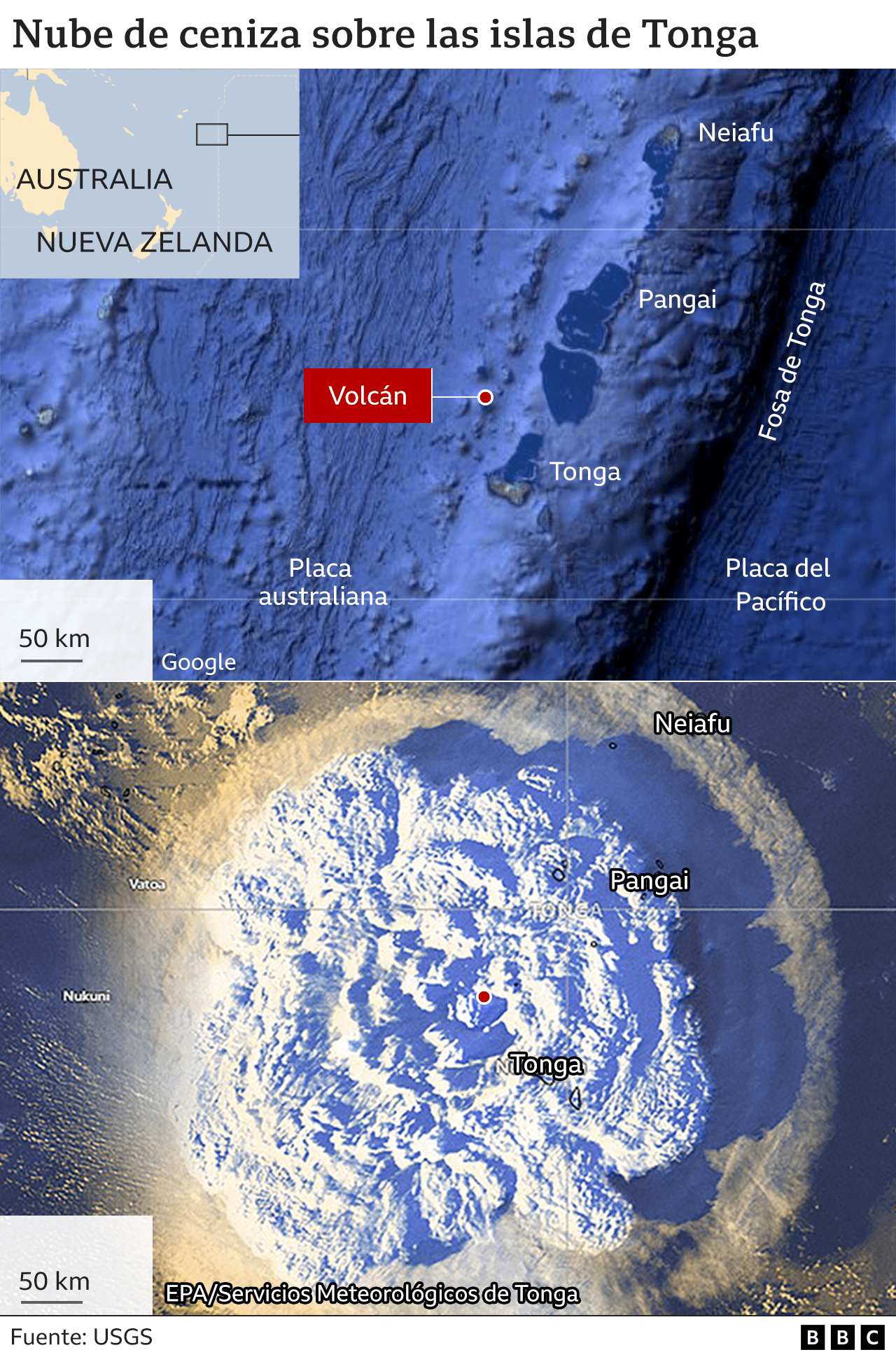
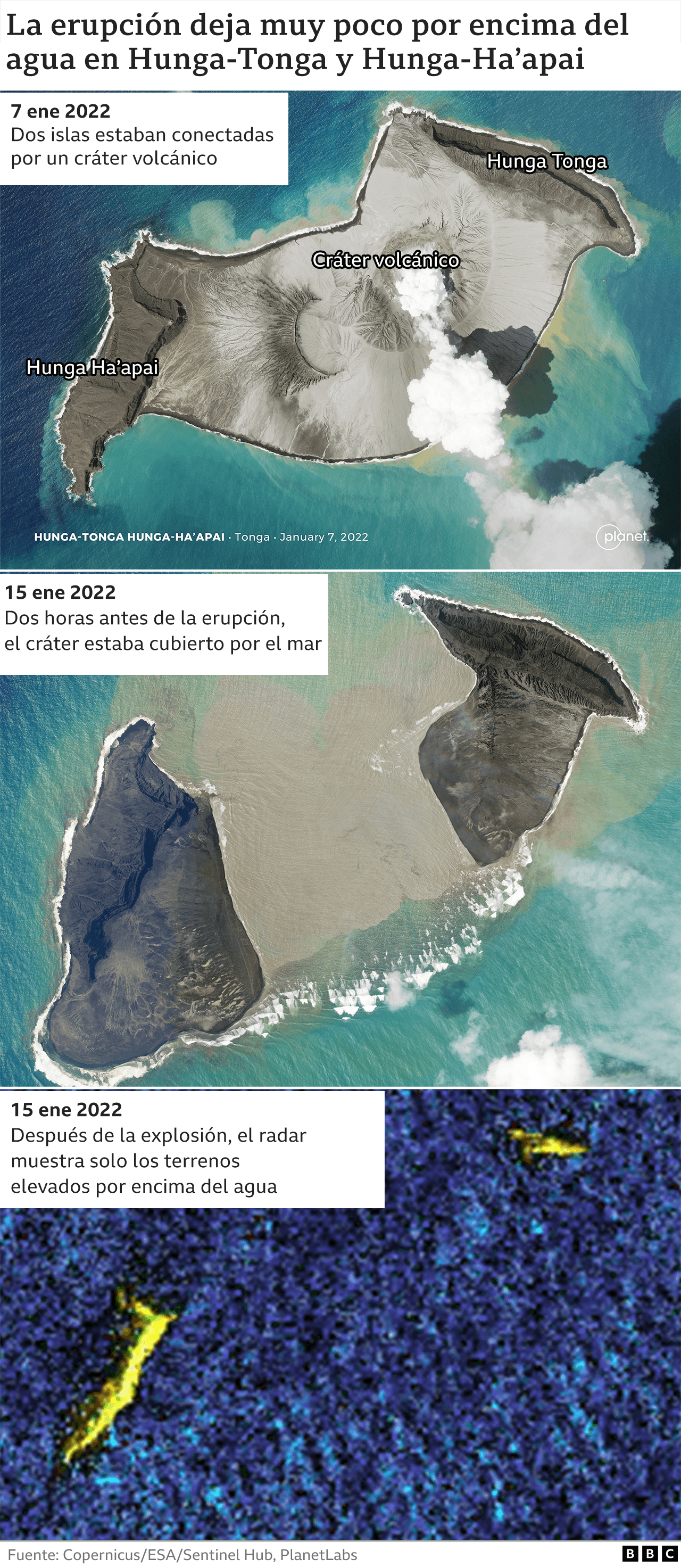
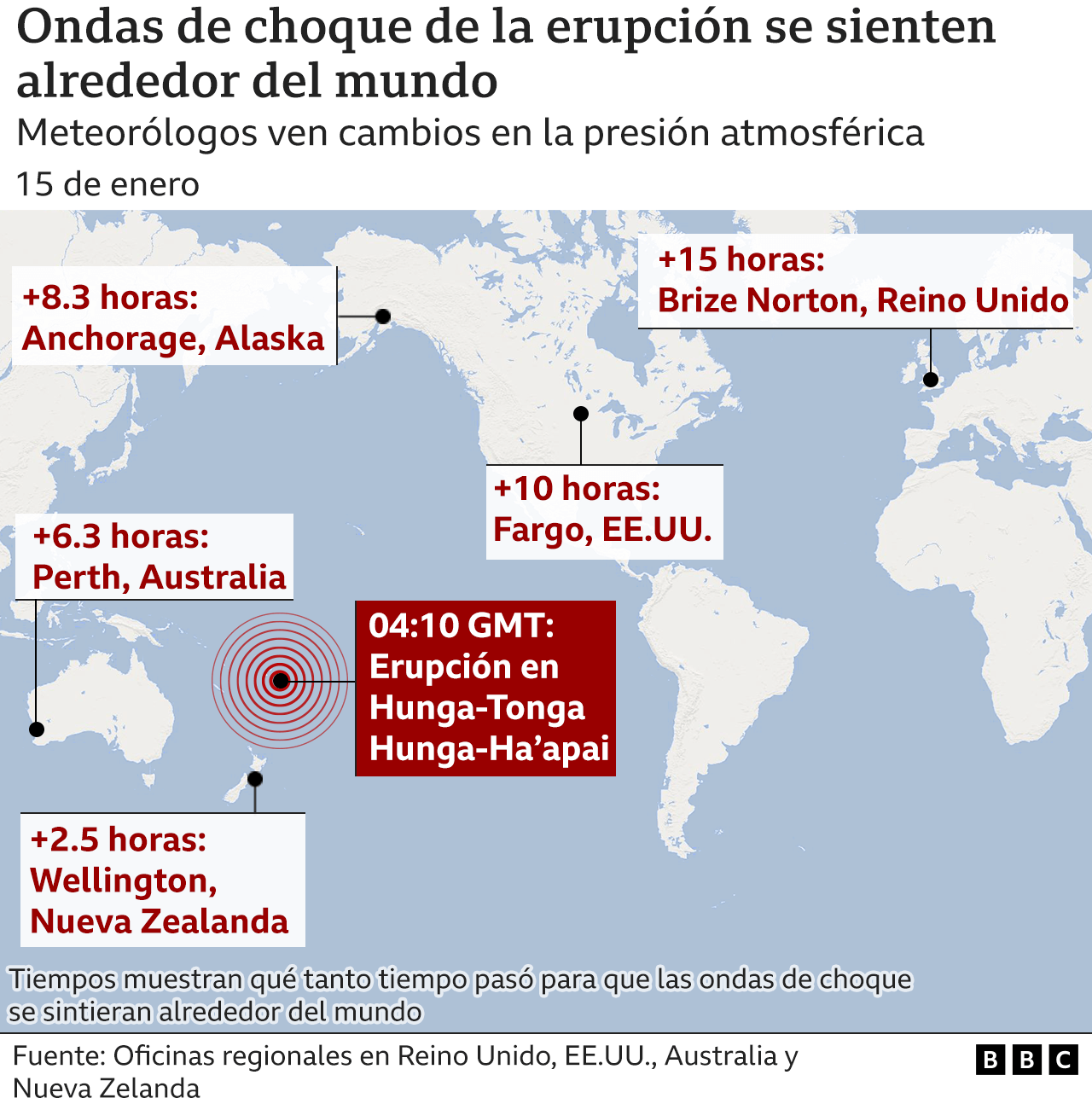
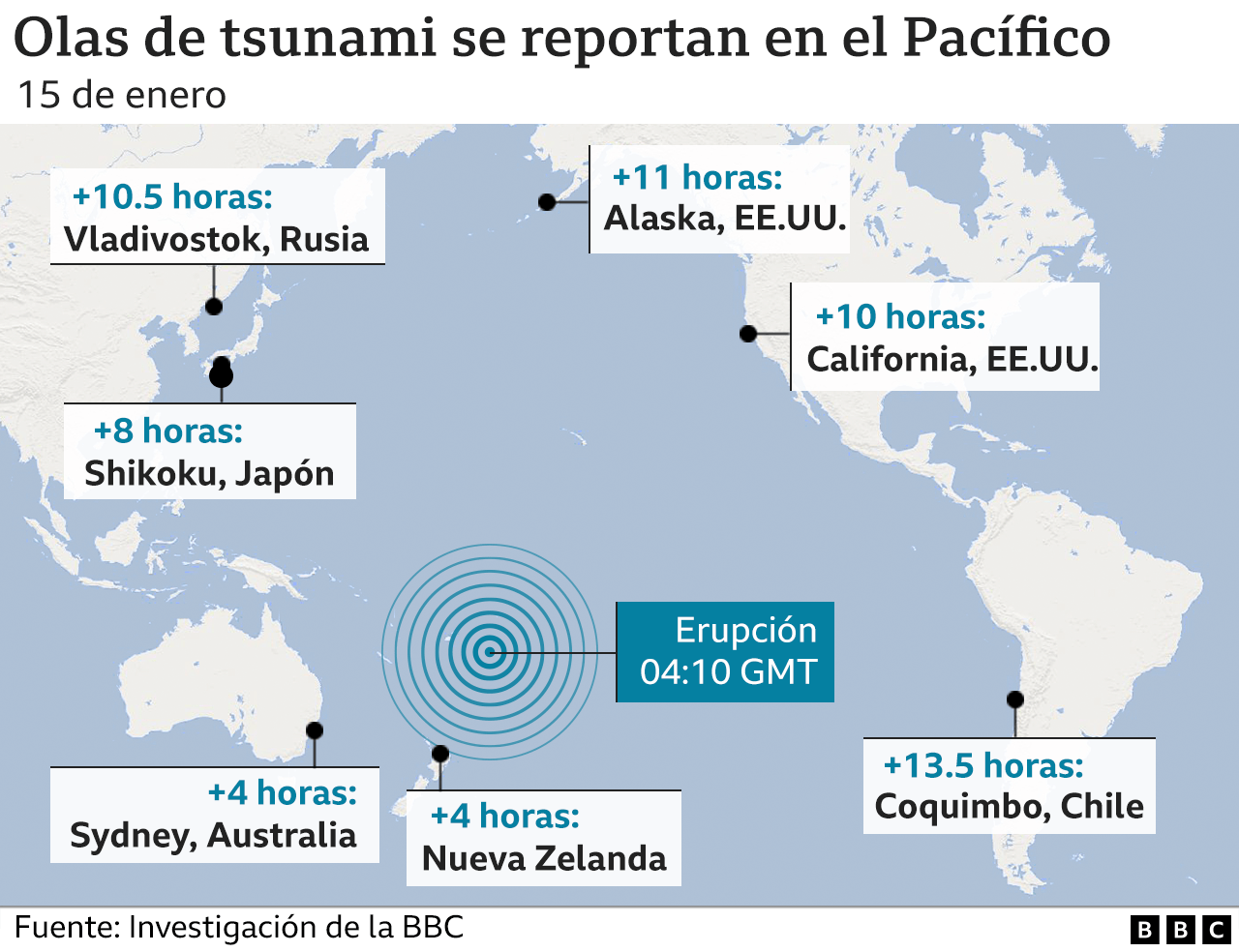
It took them less than 5 hours to get to New Zealand, and about 10 to get to Alaska.
Experts say the tsunami may have been caused by debris falling to the ocean floor and was driven by the pressure wave and its effect on the water surface.
The waves continued on Sunday and were still being reported in Australia on Monday.
Tsunami waves can be much more destructive than normal waves, even when they are not particularly high.
A normal wave can take 15 seconds to reach the shore and return to the sea.
Some of the tsunami waves in Australia were smaller than one meter but lasted almost 30 minutes.
They moved to the surface for 15 minutes, and it took another 15 minutes to come back up.
Why was the eruption so violent?
The exact reasons why this eruption was so violent are still being analyzed by experts.
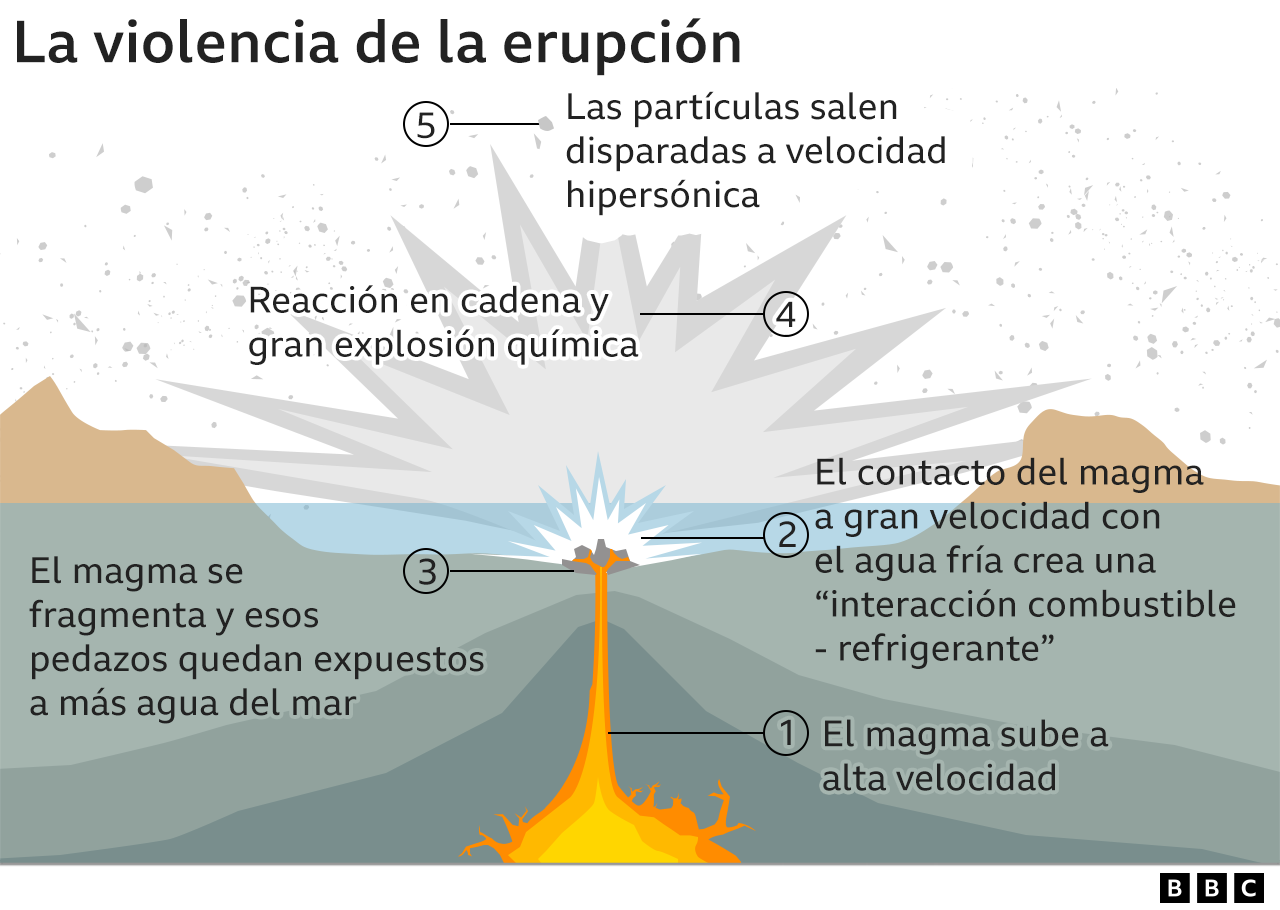
Some believe that the speed with which the molten magma shot out of the volcano may have played a role.
When magma filled with volcanic gas is propelled through ocean water at high speeds, there is no chance for a layer of steam to cool it.
And this “fuel-coolant interaction” causes a massive chemical explosion, the researchers said.
Deeper waters may have suppressed it, but the volcano’s surface was only 150-200m underwater.
How is the situation on the ground at the moment?
Communications with Tonga have been largely destroyed, making it difficult to understand the scale of the damage.
Internet and phone communications are extremely limited and remote coastal areas are cut off.
The Red Cross said even satellite phones, which many aid agencies use, had poor reception from the ash cloud.
The organization estimates that nearly 80,000 people may have been affected by the tsunami.
Dust from the volcano could contaminate water supplies, prompting locals to be warned to drink bottled water and wear masks.
The New Zealand government, which has been helping to establish the extent of the destruction, says the western coast of Tongatapu, Tonga’s main island, has suffered “significant damage”.
Now you can receive notifications from BBC World. Download our app and activate it so you don’t miss our best content.
It took them less than 5 hours to get to New Zealand, and about 10 to get to Alaska.
Experts say the tsunami may have been caused by debris falling to the ocean floor and was driven by the pressure wave and its effect on the water surface.
The waves continued on Sunday and were still being reported in Australia on Monday.
Tsunami waves can be much more destructive than normal waves, even when they are not particularly high.
A normal wave can take 15 seconds to reach the shore and return to the sea.
Some of the tsunami waves in Australia were smaller than one meter but lasted almost 30 minutes.
They moved to the surface for 15 minutes, and it took another 15 minutes to come back up.
Why was the eruption so violent?
The exact reasons why this eruption was so violent are still being analyzed by experts.
Some believe that the speed with which the molten magma shot out of the volcano may have played a role.
When magma filled with volcanic gas is propelled through ocean water at high speeds, there is no chance for a layer of steam to cool it.
And this “fuel-coolant interaction” causes a massive chemical explosion, the researchers said.
Deeper waters may have suppressed it, but the volcano’s surface was only 150-200m underwater.
How is the situation on the ground at the moment?
Communications with Tonga have been largely destroyed, making it difficult to understand the scale of the damage.
Internet and phone communications are extremely limited and remote coastal areas are cut off.
The Red Cross said even satellite phones, which many aid agencies use, had poor reception from the ash cloud.
The organization estimates that nearly 80,000 people may have been affected by the tsunami.
Dust from the volcano could contaminate water supplies, prompting locals to be warned to drink bottled water and wear masks.
The New Zealand government, which has been helping to establish the extent of the destruction, says the western coast of Tongatapu, Tonga’s main island, has suffered “significant damage”.
Now you can receive notifications from BBC World. Download our app and activate it so you don’t miss our best content.
The Dominican Government is holding talks with investment banks to acquire financial insurance that will mitigate the impact on the public finances of possible increases in crude oil, given the recent increase
Caixa Econômica Federal announced this Tuesday (3) the resumption of financing for the purchase of residential properties above R$2.25 million with resources from the savings account. The modality, framed in the Real
On February 11, a federal jury convicted Earl Richard Clouser, 55, of Burnham, Pennsylvania, for attempting to produce child sexual abuse material with a 15-year-old teenager in Cuba. According to the United
Havana/On the corner of 23rd and L, where for decades Havana waited in line to enjoy a five-scoop salad, this Tuesday the only possible taste was the bitter aftertaste of frustration. The
“PDVSA has signed supply contracts with companies marketing oil and derivatives destined for the United States market,” the state-run company reported without identifying the companies or offering more details of the contracts.