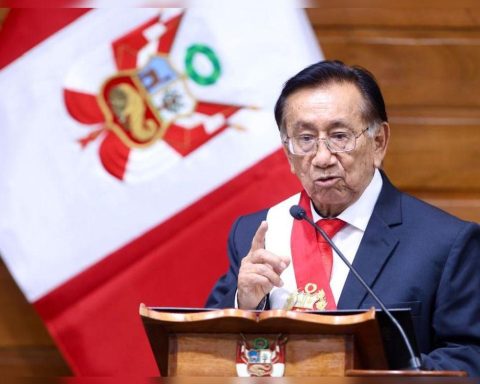
Weeks after the period to approve the regulations, the CEO of Prima AFP, Galantino Galloalert about risks for the sustainability of the pension system.
Does the Executive have until the first days of June to approve the Regulation of the Law of Modernization of the Pension System, is it very risky waiting so much?
There is a good disposition of the Ministry of Economy and the SBS to specify a regulation that gives sustainability to the system and allows to achieve the benefits of the reform, which are mainly the minimum pension and the opening to the competition. However, in that context, there are obvious risks. More projects for AFP funds are still promoted. That, obviously, generates pressure and could prevent the reform from becoming completed, that it materializes in a regulation, and that, on the way, the benefits it brings, especially for affiliates, that are above all access to a minimum pension and the opening of the competition are lost.
Is a new withdrawal of the funds opposed with the spirit of the reform?
Yes, a new retirement is contrasted with the reform, because it has not yet been defined how the treatment will be addressed within the regulations that have already withdrawn funds or the possible future retreats, which are prohibited by law. At this time, the citizen really does not know how this situation will affect it. For example, there may be people who have 180 contributions and who only need 60 to access the minimum pension. Imagine that they decide to make a retirement because Congress approves a new measure, and with it they lose 40 or 50 contributions or the possibility of reaching that minimum pension, which could have generated an important benefit.
With all the withdrawals that have been, how much will people be able to withdraw?
The problem presented today with a possible retirement, and that had already occurred in the past, but whose effect is now amplified, is that the benefit ends up mainly for people with continuous employment and belonging to the middle or high class segments. If we review the current statistics, we will see that affiliates with funds less than a ITU represent approximately 80% and 85% of the total, so that there is a new retirement, 80% or 85% could only withdraw less than one UIT.
Is the system size relevant as for the entry of new players?
What you have today is, undoubtedly, a market smaller than five years ago. With all withdrawals, assets under management have been reduced by 45%. That does reduce the ability of a new incoming. However, I think, depending on how the issue of competition is implemented, there is space. If we open the competition in a way that level the court, both for those in the sector and for the new actors, then I think there is an opportunity.
What do you mean by leveling the court?
Leveling the court means that both new and current actors must operate under the same rules. We, the AFP, are unique turn companies. With the new regulation, this restriction should be eliminated. That would allow to offer other types of benefits, such as the possibility of outsourcing the sales force or having a presence in shared premises.
What other entry barriers should eliminate the regulation?
The next entry barrier we have today are tenders. What happens is that, in the tender of new affiliates, who wins ensures a future flow of income from those new affiliates. But who does not win it, especially if it is a new participant in the system, is completely out. That new actor would have to capture affiliates one by one, which implies a very expensive strategy because it requires assuming a high fixed cost to reach those clients. That is why we believe that, forward, with this reform, the tender loses value.
Take advantage of the new experience, receive by WhatsApp our enriched digital newspaper. Peru21 Epaper.
Now available in Yape! Find us in Yape Promos.
Recommended video