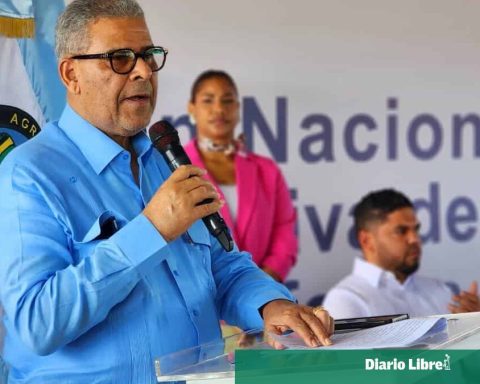
Disaster preparedness and the implementation of effective emergency plans are essential to ensure the safety of people, the protection of industries and the continuity of operations in the Haina-Nigua Industrial District, according to the findings of the recent Unified Emergency Plan presented by the Association of Industries and Companies of Haina and Southern Region (IEAHaina).
Juan Marmolejos, risk management consultant, when presenting the plan, explained that only 56% of the companies surveyed have an emergency planwhile 21% still do not have it, which constitutes a breach of national regulations on risk management.
Furthermore, 30.6% of the staff have not been socialized with existing planswhich limits efficiency in responding to fires, accidents or natural disasters.
“Many companies, in the analyzes we did, They do not have the installed capacity to respond to an emergency on their own.. However, if we have good technical supervision and enforce compliance with regulations, we will minimize what has to do with the effects of a major accident,” said the consultant.
The document highlights that the Industry Association It must function as a unified incident command system during emergencies, integrating the efforts of local relief agencies.
Likewise, he emphasizes that business protocols They must take precedence in each situation, since the absence of a plan generates lack of coordination and inefficiency.
The report recommends strengthen communication systems and mobilization of resources, including coordination between neighboring companies and updating emergency contact numbers beyond 9-1-1, to improve immediate response and contain incidents without affecting productivity.
The unified plan, which is sponsored by the Ministry of Industry, Commerce and MSMEs (MICM), also establishes the need to have specific fire protocolsearthquakes, gas emissions, medical accidents and nighttime emergencies, along with clearly mapped internal and external evacuation routes.
“He Unified Emergency Plan “It is a tool that strengthens the district’s response capacity and promotes cooperation between companies, the community and relief organizations,” said the Minister of Industry, Commerce and MSMEs, Víctor –Ito- Bisonó.
He said that, thanks to this plan, “today they have an organized system to act in the event of any eventuality, with clear protocols, effective communication and prepared equipment.” “An important step towards a safer and more coordinated industrial environment.”
- The conclusions indicate that it is vital to have adequate infrastructure, with streets in good condition and sufficient lighting, which allows rapid mobility of response teams.
- In addition, they recommend a schedule of periodic drills, supervised by local authorities, and the strengthening of industrial safety committees through specialized training and training.
“Preparation and training are the key to survive disasters“, states the report, insisting that only through collaboration between companies, authorities and relief agencies can the risk be reduced and a safer and more resilient Haina Industrial District built.

Business sector
The president of Conep, Celso Juan Marranzini, considered that the most important thing is that the Haina area has been decreed as Industrial Districtsince it concentrates a fundamental part of the country’s productive fabric.
Generating companies operate in this area, Dominican Oil Refinery and various types of industries, in addition to several of the main free zone parks in the country.
“This designation will allow us to better plan and work in structural issuesbecause, at the end of the day, a industrial zone It needs order, organization, responsiveness and security. In that sense, this is a positive step,” he said.
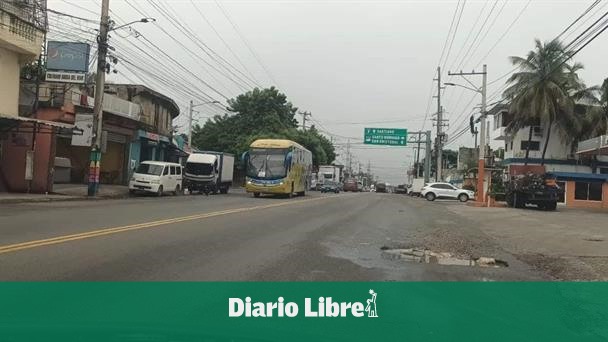
However, he said that it is necessary to continue working on the organization of the areaespecially in the interaction with surrounding areas and in road accesses. For example, the avenue Santo Domingo Beltwaywhich flows into the industrial district, has been affected by congested traffic and the occupation of lanes by informal businesses, such as gum growers and improvised workshops.
“It requires a comprehensive planning and coordination with the mayor’s office, understanding that it is a country issue, directly linked to productivity and national competitiveness,” Marranzini highlighted.
He noted that it is important to ensure that the Circunvalación Avenue —a significant investment by the Government— remains clear and functional, as does Sánchez Avenue, which also presents similar challenges.
Likewise, he assured that It is key to strengthen the fire department and security in the areaessential aspects for the Haina Industrial District continue to be a space that promotes productivity, innovation and the attraction of new companies, generating more jobs and development for Haina and the entire Southern region.
IEA Haina and the South
Luis Napoleón Rodríguez, president of the Association of Industries and Companies of Haina and the Southern Region (IEA Haina and the South), indicated that the lack of planning has generated daily challenges: congested traffic, the occupation of sidewalks and curbs by informal activities, and the parking of trucks.
“These challenges also represent a great opportunity: building a safe ecosystem that allows us to respond efficiently to any emergency situation,” he emphasized.
He explained that the document emerged after years of joint work with the MICM and relief agencies, to provide the main industrial hub in the south of the country with a coordinated emergency response system.
“This plan unifies protocols and responsibilities between companies, firefighters, Civil Defense and municipal authorities, so that Haina and Nigua are safer and more prepared industrial zones,” said Rodríguez.
He Unified Emergency Plan establishes procedures to deal with fires, earthquakes, gas leaks, hurricanes, floods and accidents with hazardous materials, as well as a communication and alert system between the more than 150 companies that operate in the industrial district.