Two civilian women are among the victims. They lived in areas close to the places that were bombed. A compilation and verification work carried out by Venezuelan journalists allowed the identification of 23 of the people killed in the US attacks
Victims Monitor and La Hora de Venezuela
As of January 5, Victims Monitor and La Hora de Venezuela count 55 deaths during the United States attack on Caracas, Miranda and La Guaira, in the early hours of the 3rd, which ended with the capture of Nicolás Maduro and his wife, Cilia Flores.
Among the victims are 32 Cubans who “were carrying out missions on behalf of the Revolutionary Armed Forces and the Ministry of the Interior, at the request of the counterpart bodies of that country,” according to a statement signed by the Havana authorities on January 4.
The president of Cuba, Miguel Díaz Canel, decreed two days of mourning. Following this statement, the Ministry of the Interior, Justice and Peace of Venezuela published a statement to pay tribute to the Cuban combatants without mentioning the casualties of the National Armed Forces.
Two days after the US military incursion, authorities have not released the total number of military or civilian victims. Nor have they disclosed mourning notes or decrees in official accounts. According to monitoring carried out by Victims Monitor, at least 22 of the 55 victims were Venezuelan military officials.
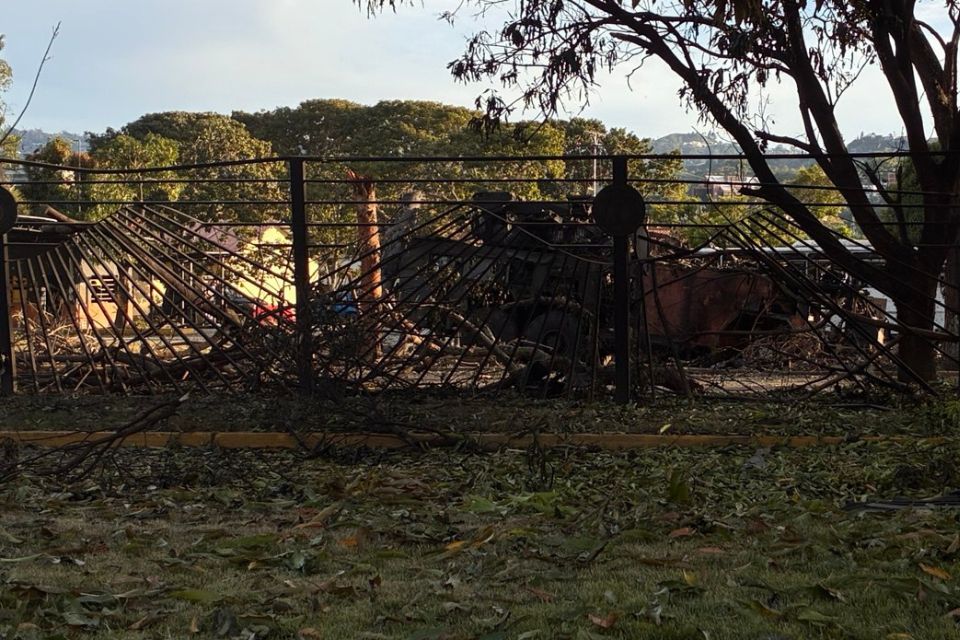
Rosa Helena González is one of the civilians who died in the early hours of January 3 during the bombing in Catia La Mar. A missile hit the building in the Rómulo Gallegos neighborhood, where she lived. She was close to turning 80 years old.
“In the early morning we heard the detonations and the block shook completely with the explosions. A mountain separates us from the Mamo Plateau (where the Marine Corps is located, which was also bombed) and that is why we decided to evacuate the building. The majority had left when the missile that hit the building exploded,” neighbor Jonathan Mayora told La Hora de Venezuela.
The victim spent more than half of his life in block 12 of the Rómulo Gallegos urbanization on Soublette Avenue in Catia La Mar, the most populated parish on the central Venezuelan coast. Her neighbors remember her as a hard-working woman who collaborated with the community.
“Mrs. Rosa had not come out. We went to help her. She was beaten, but she told us to help her get out, that she was getting better. It didn’t happen like that. We took her straight to the hospital.” [el hospital Dr. Alfredo Machado, ubicado en la misma avenida]”But he couldn’t hold it and died there,” adds the witness who also lost his home due to the explosion.
Rosa Helena’s family told ARI that the cause of death on the death certificate indicates that she had a myocardial infarction.
Death in the Volcano
The other deceased woman is Yohanna Rodríguez Sierra, 45 years old and of Colombian nationality.
Yohanna worked in a home located less than a kilometer from where the transmission antennas that serve the military sector, television stations and telecommunications companies operate in the El Volcán sector, Miranda state.
She lived with her daughter Ana Corina Morales, 22, who was also injured.
“Yohanna, very dear to us, decided to go out to see what was happening in El Volcán,” said a relative of the owners of the El Topito residence, which communicates internally with the sector where the repeater towers are located.
“The daughter asked her not to move, but she insisted on going because she was determined to take photos of what was happening,” he added.
On the Volcano there are at least six small houses, where antenna caretakers live. The morning of the attack, only one worker was on duty because the rest had not yet returned from their days off for the New Year’s party.
Yohanna arrived at the site at the moment the second missile fell and was hit by objects in the chest, which caused her death, according to what her daughter told the relatives of the owners of the house she was taking care of with her mother.
Yohanna’s daughter had minor injuries. She was treated at the Dr. Domingo Luciani Hospital in El Llanito and later discharged.
*Read also: Venezuelan Army confirms the death of 23 officers due to US attacks on #3Jan
Four soldiers identified
The identities of four other Venezuelan soldiers who died in the United States bombing of Fuerte Tiuna were known: Sergeants Eliannys Camacho, 22 years old; and Yorlianny Michel Delgado Suárez; Captain Moisés Sequera and Eduardo Soto Libre, whose rank is unknown at this time. With these cases there are 23 deaths in the attacks that have been identified.
The names of the other officials who died in the attack and that had been published on January 4 are: Jeampier Josue Parra Parra, Franyerson Javier Hurtado Ortuño, José Ángel Ilarraza González, Jerry Antonio Aguilera Velásquez, Franco Abrahan Contreras Tochon and Isaac Enrique Tovar Lamont, who were part of the Honor Guard of the Presidential Security Battalion number 6; as well as Lieutenant Yendis Cristofer Gregorio Barreto and Second Corporal Luis Enrry López Sánchez. Both belonged to the same component.
From the Bravo Squadron, also attached to the Presidential Security Battalion, the victims are Lerwis Geovanny Rivero Chirinos and Richard Rodríguez Bellorín. The victims of Custody Battalion number 3 are Sergeants Anaís Katherine Molina Goenaga and Alejandra Del Valle Oliveros Velasquez, as well as Carlos’s guard Julio Quiñónez Perozo.
Two students from the Military Academy, Jhonatan Alexander Cordero Moreno (distinguished) and Saúl Abrahan Pereira Martínez, are among the deceased.
Likewise, the first lieutenant of the Military Aviation, Deimar Elizabeth Páez Torres, who was at the Tettra Network Teleport, located in the Communications Directorate of the National Armed Force in Fuerte Tiuna, joins; and Lenin Osorio Ramírez, son of Soraida Ramírez, president of the Autonomous Institute National Council of Human Rights of Children and Adolescents (IDENNA).
It was known that there were 25 bodies in the Military hospital. It is possible that some correspond to the 23 already mentioned or the 32 Cubans.
*Journalism in Venezuela is carried out in a hostile environment for the press with dozens of legal instruments in place to punish the word, especially the laws “against hate”, “against fascism” and “against the blockade.” This content was written taking into consideration the threats and limits that, consequently, have been imposed on the dissemination of information from within the country.
Post Views: 87