The UCAB Human Rights Center and various NGOs asked the authorities to discuss and approve a specialized law against human trafficking in the country. According to figures presented by Cepaz, seven out of 10 victims of trafficking in the Caribbean were Venezuelan until 2021
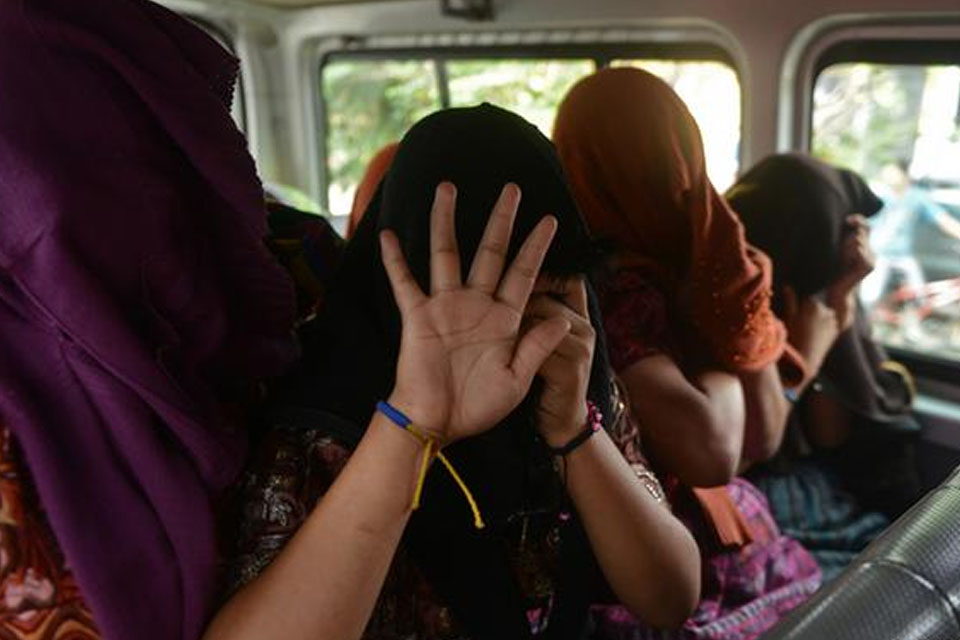
At least 4,761 Venezuelan women, girls and adolescents were rescued from human trafficking networks between 2019 and 2023 in different countries, according to data presented by the NGO Mulier during a seminar organized by the Andrés Bello Catholic University (UCAB).
Estefanía Mendoza, a lawyer specializing in gender violence and a member of the NGO Mulier, explained that only in 2023 about 1,395 Venezuelan, 80 of them girls and adolescents, were rescued from people trafficking networks.
“Venezuela, in the context of the complex humanitarian emergency, is an ideal scenario for the phenomenon of trafficking,” Mendoza warned.
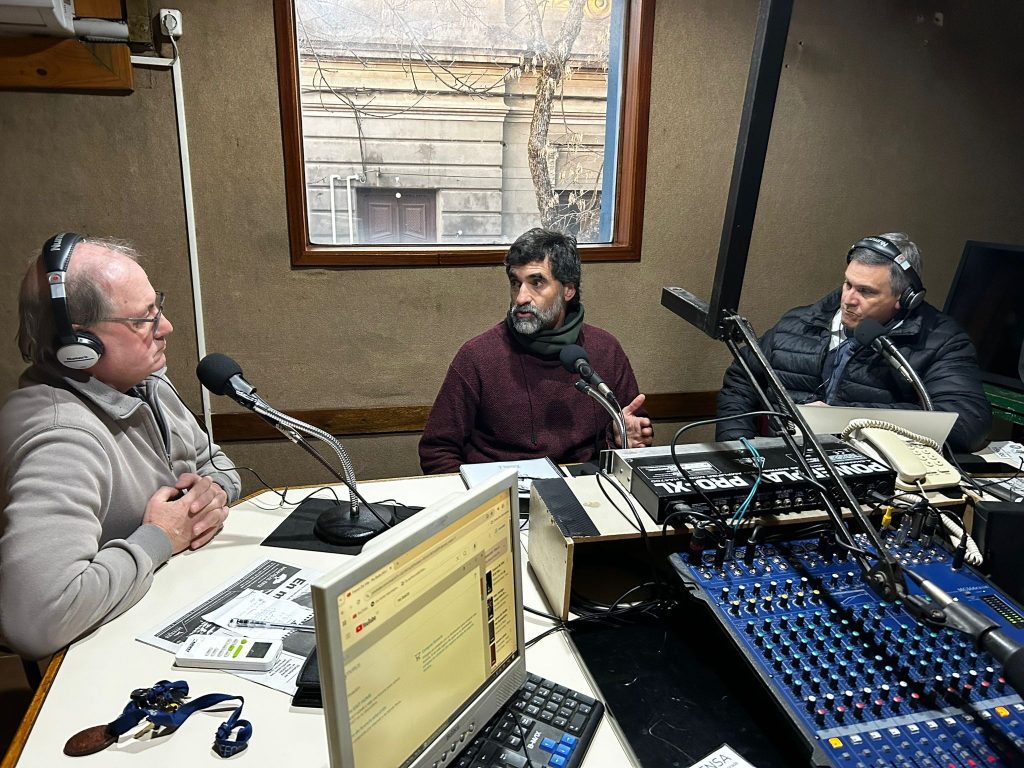
During the Seminar, organized by the UCAB Human Rights Center, various specialists asked the authorities to discuss and approve a specialized law against human trafficking. This with the objective of consolidating the existing provisions and unifying the application in the judicial system, said the lawyer and university professor Desireé Vitale.
«The creation of a unique regulation would allow consolidating the existing provisions on human trafficking, simplifying its interpretation and application in the judicial system. This is crucial to ensure that all cases are treated in a consistent and fair way, ”Vitale justified.
*Also read: Costa Rica authorities link the Aragua Train with a disjointed trafficking network
María Gabriela Cuevas, a member of the Institute of Legal Research of the UCAB, said that “there are no cases of application of the norm that allow things to be done well.”
«They are crimes that involve different types of people. The responsible persons are not being identified as criminals. The penalty of victims contributed in perpetrators concerns. There are no research or protocols, ”he added.
Migration feeds people trafficking
According to figures presented by CEPAZ, based on their own follow -up and international organizations, seven out of 10 victims of trafficking in the Caribbean were Venezuelan until 2021.
“Venezuelan victims are systematic targets in border contexts, precariousness or irregular migration,” said Cepaz coordinator Beatriz Borges.
Borges said that “migrations are marked by multiple forms of violence. How are states responding? It is not just about sanctioning crimes, but about working on the support and accompaniment of the victims. States have clear obligations in a global legal framework ».
Meanwhile, lawyer Selene Soto stressed that the migratory context exacerbates violence and vulnerabilities linked to human trafficking. «Neutral immigration policies, which have no gender approach and that constitute barriers to regularization, for example, become a cause of vulnerability. That is why the importance of access to information in the migratory context, as part of the general right to freedom of expression and as the duty of states regarding active transparency ».
Trafficking with Modern Persons and Slavery
The Coordinator of the CDH UCAB office in Guayana, Eumelis Moya, warned about the naturalization of “distortions” that normalize the forms of modern slavery, in a context of multidimensional crisis such as Venezuelan.
“The dissolution of norms has begun to gestate a particular life system on which you have to work,” Moya said.
According to the CDH UCAB, the routes of modern slavery in Venezuela include interstate routes in Bolívar, Anzoátegui and Nueva Esparta, entities in which factors such as mining and tourism facilitate the development and growth of networks of labor and sexual exploitation, as well as the attraction of children and adolescents, women and vulnerable family heads.
«Anomia, lack of regulation and social control allows abusive practices to be perpetuated without consequences. There is generalized impunity, corruption, and legislation on human trafficking is needed. The time has come to propose standards and move towards new paradigms, ”said Moya.
In its 2024 report, the UCAB CDH explained that international people traffic routes include entities such as Bolívar, with transit to Brazil and Guyana; Táchira, Zulia, Apure and Amazonas, with exit to Colombia and subsequent connections; as well as Delta Amacuro, Sucre and Falcón towards Trinidad and Tobago, Curacao and Aruba.
Stigmas and misinformation
The Documentation Coordinator of the Human Caleidoscope NGO, Nataly Carvajal, stressed that normalizing narratives increase the risks related to human trafficking.
The political scientist explained that resignation and banalization, together with the justification for the economic and social crisis, as well as stigmatization and disinformation, amid distrust in institutions, generate a vicious circle that entails impunity and revictimization.
“In an environment where violence and crime are frequent, trafficking and exploitation crimes are perceived as part of the norm,” Carvajal said.
For the member of Human Caleidoscope, the lack of awareness and education in human rights, in a context of massive irregular migration, increases the risks and challenges linked to human trafficking.
«We must educate in human rights. Victims and society do not recognize crimes as serious violations and, for example, we see how violations increase. It is important to change the narratives of normalization of violence to reach more communities, educate and avoid more victims of this scourge, ”added Carvajal.
With information from The Ucabista
*Journalism in Venezuela is exercised in a hostile environment for the press with dozens of legal instruments arranged for the punishment of the word, especially the laws “against hatred”, “against fascism” and “against blockade.” This content was written taking into consideration the threats and limits that, consequently, have been imposed on the dissemination of information from within the country.
Post views: 527