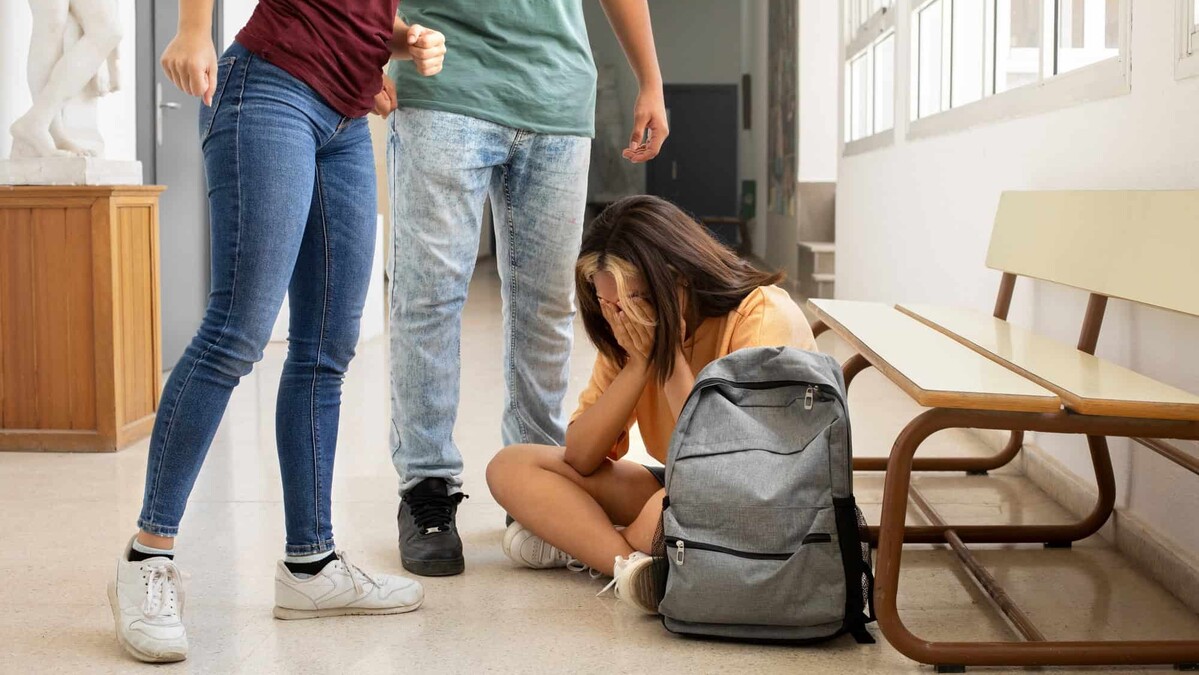
He bullying either school bullying continues to be one of the most widespread forms of violence against children and adolescents in Latin America and the Caribbean, where one in four claims to have suffered, according to the report. United Nations Fund for Children (UNICEF) and the World Health Organization (WHO).
According to the Global School Health Surveypublished by the WHO inside the report “Violence against children and adolescents in Latin America and the Caribbean: New data and solutions”, about 30% of adolescents between 13 and 17 years of age in Dominican Republic they declared having suffered bullying at least once.
Of the 23 countries studied, Peru and Brazil they have the higher rates of the region around 50%. Meanwhile, Chile and Barbados have the lowest rate of school bullyingabout 15% of the population.
As defined in the document, for it to be considered bullying a person or group is required to repeatedly demonstrate a aggressive behavior against a child or adolescent who cannot easily defend themselves.
“He bullying it’s a behavior patternmore than an isolated incident. It may involve verbal abusephysical violence, sexual harassment and cyberbullyingboth inside and outside of school,” highlights report.
International organizations warn that victims of bullying have a higher risk of suffering from depression, anxietysuicidal thoughts, social isolation and poor school performance.
“Those who bully others also face risks, as they tend to display more antisocial behavior and greater substance use“, he indicates.
Frequent harassment
In the region, the reasons for harassment They are multiple:
- Physical appearance
- Ethnicity
- Nationality
- Religion
- Disability
- sexual identity
Statistics reveal gender differences in the way this violence is presented. Children are more likely to suffer physical attackswhile girls are more exposed to psychological abuse and sexual.
Nails 324 girls When consulted, they said they had received ridicule about the shape of their body; in the case of men, about 154.
By measuring the number of students who had received physical damage, 183 children They responded affirmatively, compared to 69 girls.
In the case of the sexual teasingthose affected were 135 children and 125 girls.
Actions to take
UNICEF and the WHO propose more effective responses that include solid laws, school programs comprehensive programs, training of educational personnel and active participation of communities, highlighting that confronting harassment is not only a legal obligation, but an essential condition to protect the rights and well-being of children and adolescents.