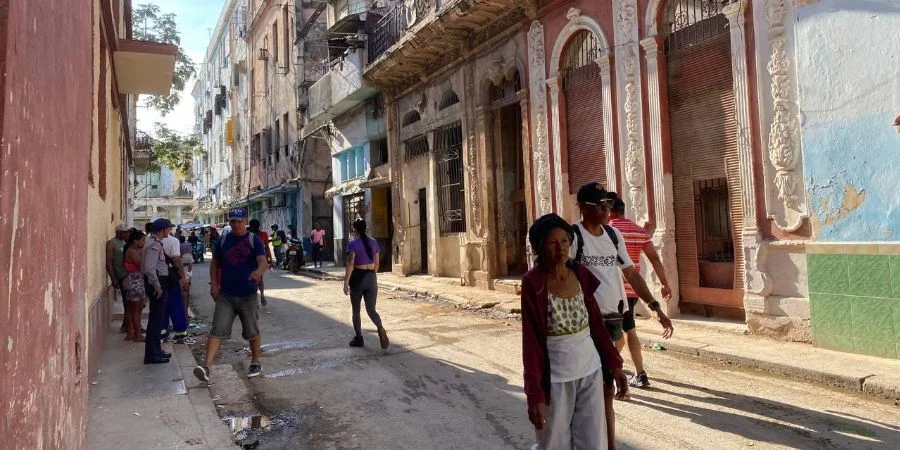
MIAMI, United States. – The body of a young trans woman, identified as Gadir Eduardo, 29 years old, was found lifeless at number 466 Sol Street, between Villegas and Ejido, in Centro Habana, as confirmed by a collaborator of CubaNet present in the place.
Witnesses indicated that the victim died from self-inflicted injuries, specifically by hanging.
The young woman, originally from Las Tunas, resided irregularly in a collapsing building occupied by homeless people. Neighbors of the property found the body this Friday “around 3:00 in the afternoon” after moving due to the strong smell that was perceived in the area, reported the collaborator of CubaNetwho keeps his identity protected to avoid retaliation.
The same source indicated that the authorities began an investigation and that, until that moment, the causes that led to the death were not known. “The police do not know; the case is under investigation,” he stated.
The young woman’s partner was not in the area at the time of the discovery, but arrived after being notified and was being questioned by the Police.
Suicide is considered a public health problem in Cuba, according to official and regional data. He Cuban Health Statistical Yearbook (with data through 2023) reported 1,671 deaths from “intentional self-inflicted injuries” in 2023, with 1,390 men and 281 women.
That same document states that, “depending on sex, the male mortality rate is 5.1 times higher than the female mortality rate” for this cause.
In parallel, the country profile of the Pan American Health Organization (PAHO) slogan for Cuba a suicide rate of 10.2 per 100,000 inhabitants.
For its part, an investigation from the independent media theTouch based on official data on “intentionally self-inflicted injuries” indicates an increase in minors: deaths from this cause in children and adolescents aged five to 18 would have increased from 18 in 2022 to 28 in 2023, and in the group aged 10 to 19, from 31 to 34.
In Cuba, there is a national Plan/Program linked to the prevention of suicidal behavior that describes the logic of surveillance and action (tactical, strategic and evaluative components) to record and identify cases, risk groups and circumstances, with the objective of informing decision-making.
According to an informative document of the National Medical Library of Cuba, the “crisis telephone line 103” answers around 5,000 calls annually.
Suicide is a multi-causal phenomenon that remains among the main causes of death in young people globally, with a high burden in low- and middle-income countries or countries in crisis.
The events occur in the midst of a prolonged socioeconomic crisis that has deteriorated living conditions on the Island to inhumane levels.
The Pan American Health Organization (PAHO) has warned that the combination of inflationary pressures, shortages of medicines and supplies, and the departure of health personnel has strained the health system and has impacted the well-being of the population. Along the same lines, Human Rights Watch has described that the economic crisis has affected the enjoyment of social rights, with prolonged blackouts and acute shortages of food and medicine.
Furthermore, international organizations have pointed out that LGBTIQ people—and, in particular, trans people—may face additional scenarios of vulnerability due to the persistence of violence and discrimination. Human Rights Watch remember that, although the 2019 Constitution prohibits discrimination based on sexual orientation and gender identity, many lesbian, gay, bisexual and trans people suffer violence and discrimination, especially outside Havana.