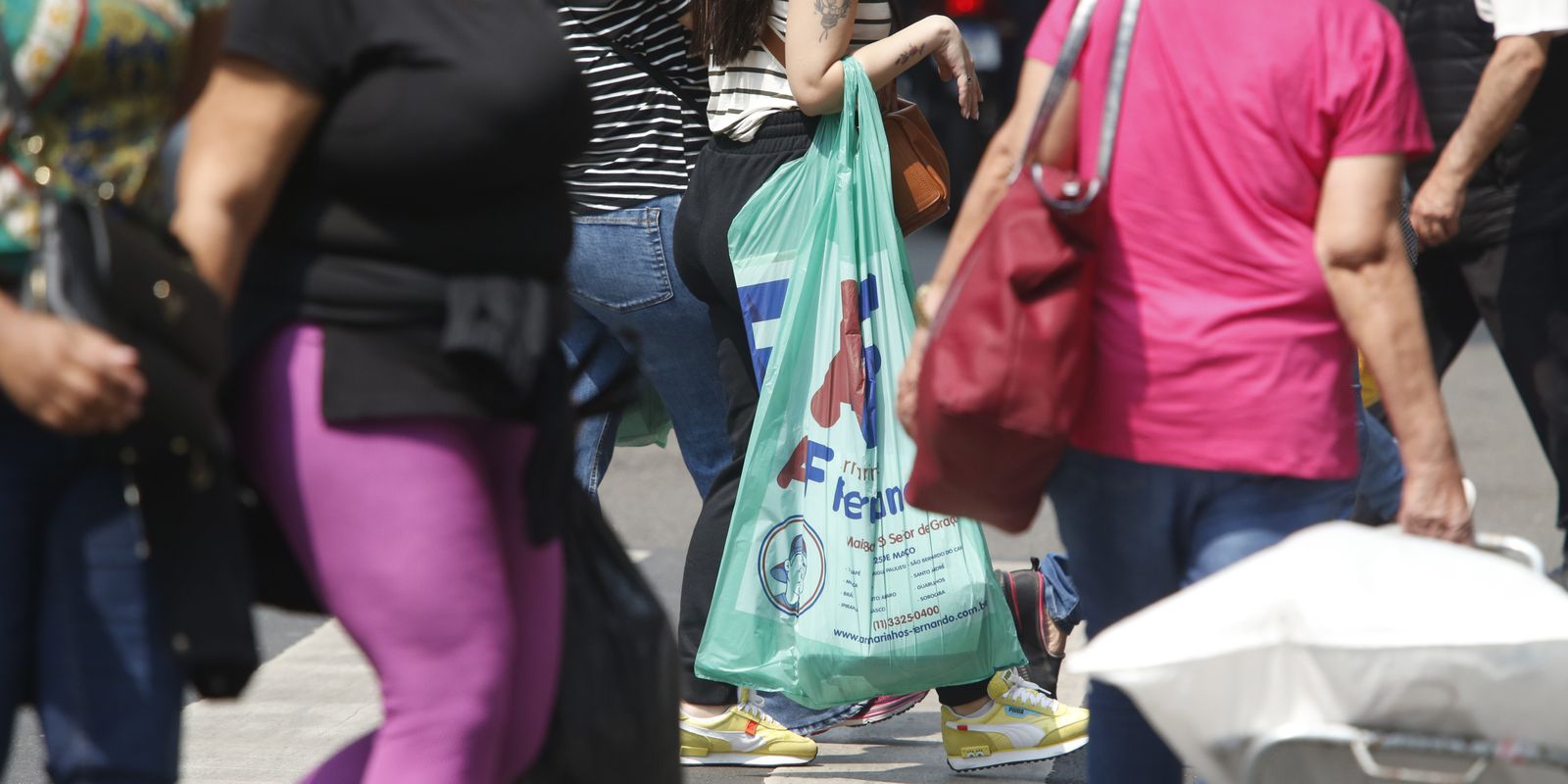
Women are still a minority in the job market and receive lower income than men, despite having more education. This is what the module on Work and Income of the 2022 Census, released this Thursday (09) by the Brazilian Institute of Geography and Statistics (IBGE), shows. When the survey was carried out, 62.9% of men over 14 were working, while among women this proportion was 44.9%.
As a result, despite being 52% of the general population, women were only 43.6% of the workforce in 2022.
The proportion was only reversed in three of the ten large occupation groups. Women were the majority of science professionals and intellectuals, administrative support workers and service workers, salespeople in shops and markets. At the other end, lower female presence was identified among plant and machine operators and assemblers and members of the armed forces, police and military firefighters. The analysis by activities showed that they are the absolute majority in domestic services, with 93.1%, and they also represent more than 70% of workers in human health and social services and education.
Income
Income also reinforces inequality. The male average was R$3,115 per month, R$609 more than the female average, which was R$2,506. The difference increases depending on the level of education.
Among workers with completed higher education, while men earned an average of R$7,347, women received around 60% of this amount, that is, R$4,591. Despite this, women remained more educated: 28.9% of female workers had completed higher education, compared to 17.3% of male workers.
The IBGE also identified differences in income obtained from work considering color or race. The lowest amount was declared by indigenous workers, R$1,653 per month, followed by black people, R$2,061. At the other end, workers of yellow color or race received R$5,942, and white workers, R$3,659.
In general, black, brown and indigenous people had lower incomes, not only in relation to white and yellow people, but in comparison with the national average, regardless of their level of education. But this intensifies when analyzing only workers with completed higher education: indigenous people received less than half the amount paid to yellow people, R$3,799 compared to R$8,411. The difference between blacks and whites is also significant: R$4,175, compared to R$6,547.
The level of education itself also revealed major discrepancies. Among white and yellow people, the proportion of people with higher education exceeded that of workers with no education or with incomplete primary education. But the opposite occurs among black and brown and indigenous people, and in the latter case, while 34.7% of workers did not complete even the most basic educational cycle, only 12.4% completed higher education.