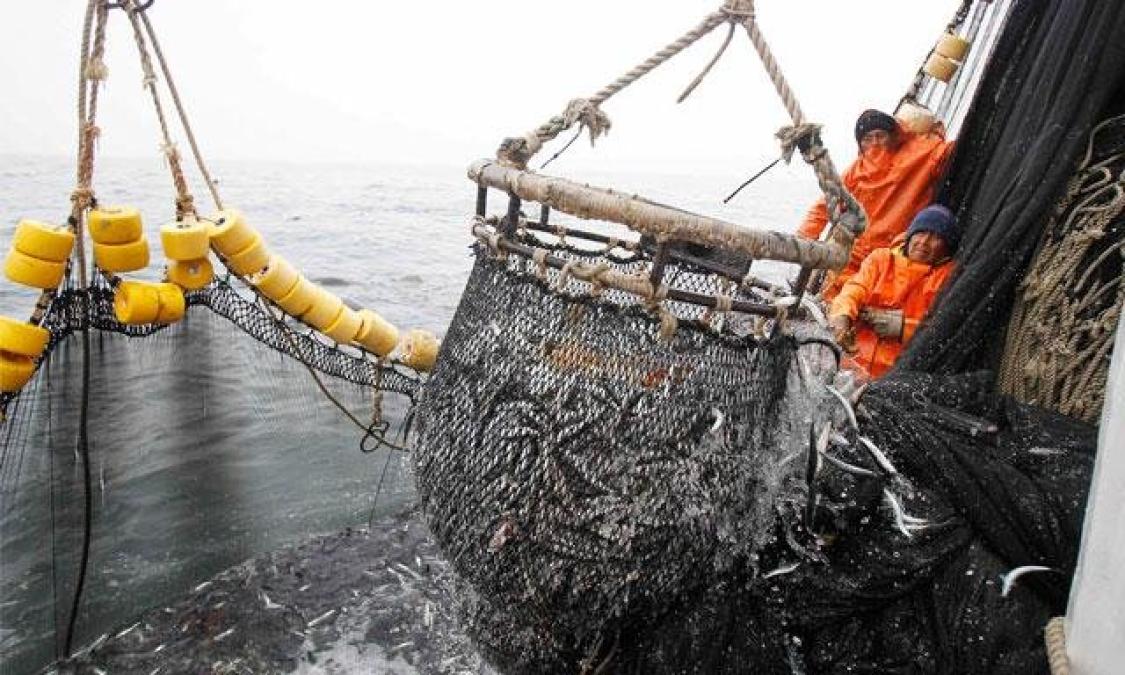
The rigidity of fishing regulations in the south of the country has generated a critical balance: the loss of nearly 1,500 jobs annually, unrealized exports for about US$2,000 million and unrealized sales for S/3,500 million in the value chaindirectly affecting SMEs.
Given this scenario, a review by the Ministry of Production is urgent to compensate for the economic damage.
“There are around S/4.5 billion GDP that fishing activity has stopped producing, cumulatively,” said Diego Díaz, partner at Macroconsult.
This situation dates back to the reorganization established a little over a decade ago. Said regulations prohibited industrial fishing within the first five nautical miles in order to reserve that strip for artisanal and smaller-scale activity.
However, the regulation omitted a geographical factor identified by Imarpe: in the southern area, specifically off the coast of Marcona, a strong outcrop of deep water occurs that concentrates the resource precisely within those first five miles.
As industrial access was restricted in this area of high concentration, the extraction of the shoal became extremely complex for companies in the sector.
Although at the time a special regime (Prosur) was approved that allowed industrial activity in specific areas without environmental impact, it was finally eliminated. As a consequence, the catch rate plummeted from 53% to 22%, causing the closure of fishing plants and a sustained deterioration in the sector’s contribution to regional employment.
Nobody knows who he works for
The anchovy biomass in the south extends to the coasts of Chile, its management being shared by both countries, but in an uncoordinated manner.
Díaz maintains that the figures show that when our country has reduced the extraction of the resource due to regulatory issues, Chile’s fishing quota has been larger. In other words: “the anchovy that we did not fish was caught by Chile,” mentions the specialist. This situation can be corroborated with the statistics of Imarpe and Produce.
According to them, since 2010 the anchovy catch in the southern part of Peru is lower than that in the northern part of Chile. That gap reached, on average, 50% in 2012; In 2013 and 2017 it reached levels of 65% and 67% lower, respectively, while between 2018 and 2022 it remained 63% lower.
“Chile, with a similar geography and access to the same stock of the resource, has maintained a healthier industry, with higher levels of employment and operation than the fishing industry in southern Peru,” highlighted Díaz.
Corrective measures
Among the corrective measures, Díaz proposes moving towards a more adaptive fisheries management, which incorporates the particularities of the southern zone without altering the sustainability objectives of the resource.
Specifically, it proposes evaluating the reinstatement of a special regime that allows industrial fishing in specific areas within the five miles, as long as environmental and coexistence criteria are met with artisanal fishing, as was the case until 2012.
Likewise, it suggests reviewing the closure criteria applicable to the south, based on Imarpe studies that show biological differences with respect to the central-northern area.
According to this evidence, the southern anchovy would reach maturity at a smaller size, which opens the possibility of evaluating technical adjustments without compromising the conservation of the resource.
For the specialist, it is up to the Ministry of Production to analyze this scientific information and determine if it is feasible to introduce regulatory changes that allow activity and employment to be recovered in the region.
RECOMMENDED VIDEO