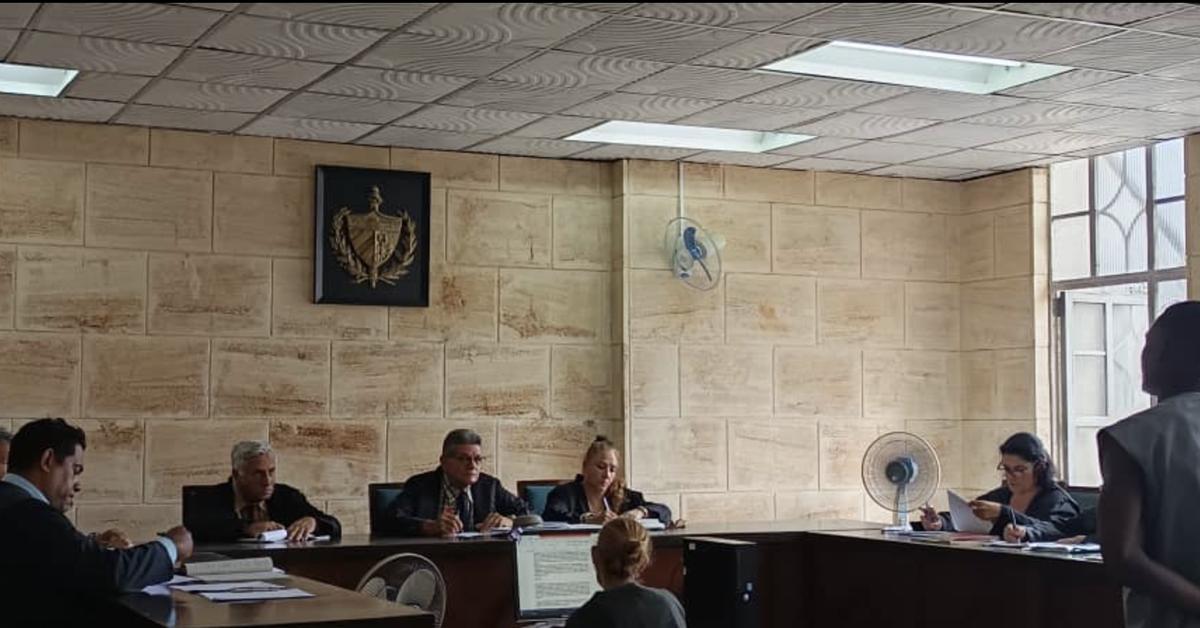
Havana/The Municipal Court of Bayamo sentenced 15 protesters from the protests of March 17, 2024 in that city in the province of Granma, with sentences ranging up to six years in prison. The defendants were found guilty of crimes such as public disorder, attack, resistance, contempt and instigation to commit a crime.
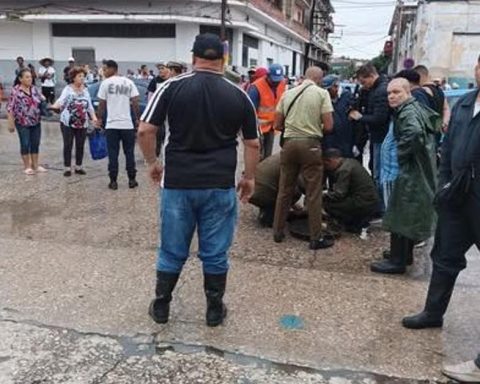
The facts judged correspond to the popular protests in which hundreds of Bayamese took to the streets in March of last year, shouting “Freedom” and “Homeland and life.” As the demonstration advanced through different areas of the city, special forces and the Ministry of the Interior prevented them from passing and began to repress the crowd. The videos that circulated on social networks showed that citizens continued with their demands despite the beatings and arrests.
Hundreds of Bayamese took to the streets in March of last year
The sentences, which are now final, have generated multiple criticisms from activists and independent legal organizations. The independent media Martí News interviewed lawyer Alain Espinosa who stated that the Court’s decision “once again exposes the repressive nature of the Cuban State and, in a very marked way, the political will to repress rights.”
The jurist recalled that, as required by General Comment 37 of the United Nations Human Rights Committee, an assembly cannot be considered to lose its peaceful character just “for causing minor traffic interruptions” or for involving civil disobedience, so the prosecution of these 15 accused responds more to motives political than legal.
Last SeptemberIn an unusual informative gesture, the official press reported on the holding of the oral hearing against the Bayamo protesters. In that brief note, it was reported that a total of 13 of them were in provisional detention, and the rest “with non-detention measures of obligation contracted in the minutes and prohibition of leaving the country.”
The ruling party then clarified that the Constitution and current criminal laws guaranteed that “the procedural guarantees and right to defense of the accused” were met in the processing of the process, although there are numerous organizations inside and outside Cuba that have systematically denounced irregularities in the trials of protesters, such as those on July 11, 2021.
The Bayamo protest was not the only one that took place on March 17 – demonstrations also occurred in Santiago de Cuba and Holguín – and they were similar to those of 11J not only in that they happened on a Sunday: they began with shouts of “we want current” and “we are hungry” and ended by chanting “homeland and life” and “freedom.”
The Bayamo protest was not the only one that took place on March 17
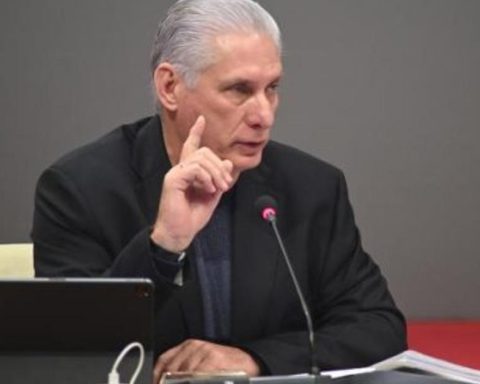
The next day, President Miguel Díaz-Canel made it clear that the regime’s position would be the same as on other occasions. In a sequence of messages on the social network, X commented on the demonstrations saying that they had “destabilizing purposes” and had been carried out by “terrorists based in the US”.
Those convicted of the Bayamo protests, whose sentences became final this December, are: René Aguilera Aguilar, with six years of deprivation of liberty; five years of deprivation of liberty for David Alexander Téllez Pérez, Mario Luis Espinosa Cedeño and Osvaldo Núñez Villavicencio; four years of deprivation of liberty for Jorge Alexis Milanés Cedeño; three years of deprivation of liberty for Lázaro Armando Morales Romero, Jesús de Nazaret Arzuaga Almaguer, Franky Carmona Arias, Reynaldo Lucas Leyva Romero, Antonio Zamora Blanco, Ángel Luis Céspedes Cruz, Pedro de Jesús Martínez Rivero and Daniellis Jorge Puig.