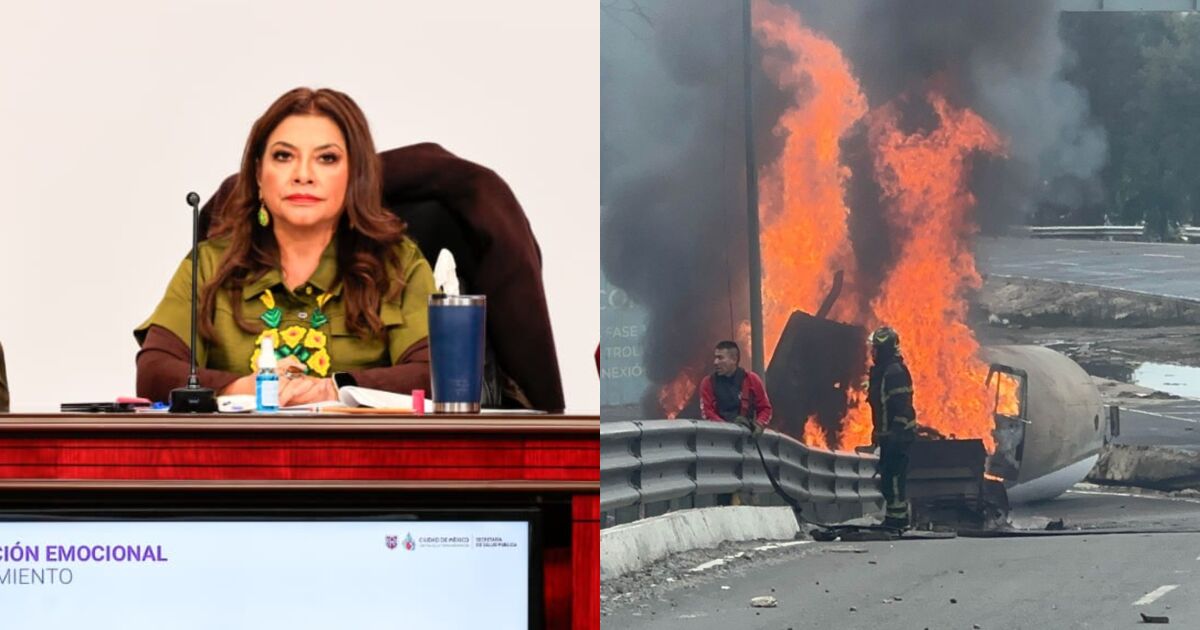
The president indicated that shortly after the incident the Government of Mexico City gave support of 40,000 pesos to victims and families so that they could have resources immediately.
In addition, the Traffic Regulations were reformed to impose limits on the circulation hours of hydrocarbon pipes, the maximum speed at which they can circulate was reduced to 30 kilometers per hour and the amount of dangerous substances that can be transported in the capital was reduced.
“Next year we are going to even present an application with which we will be able to monitor the pipes that transport gas or hydrocarbons through the city and we will have a monitoring system of where they are going, how fast they are going and what situation they are in,” Brugada said.
Bertha Alcalde, head of the Attorney General’s Office of Mexico City, pointed out that the investigation and the expert reports carried out determined that the responsibility for the explosion immediately lay with the driver of the pipe (who died) due to excessive speed and loss of control of the vehicle.
Likewise, there is responsibility of the company for not complying with adequate training of the operator in safe driving of units with dangerous materials, handling of high curves, emergency protocols and procedures in the event of LP gas leaks, as well as insufficient supervision of driving days to monitor rest times, limits on hours behind the wheel and fatigue factors in drivers that increase the risk of loss of control.
“The studies carried out ruled out problems in the traffic lane, mechanical failures of the vehicle or external natural factors that could have generated the accident: the infrastructure complied with the regulatory parameters, the vehicle did not present failures prior to the impact and the meteorological conditions were stable,” said Alcalde.