Havana/The Cuban economist Pedro Monreal considers that 100% of state workers in Cuba are in a situation of extreme poverty. His analysis is based on the recent report of the Economic Commission for Latin America and the Caribbean (ECLAC), for which – as usual – the Government of the Island did not send its data. The Cuban absence contrasts with the detailed panorama of the rest of the region.
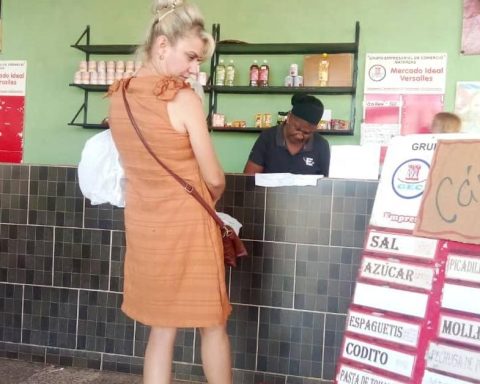
Since his count in XMonreal dismantled the official opacity. If the international extreme poverty line is applied according to the criteria of the World Bank – $2.15 a day –, all Cuban state workers fall into that category. Taking as a reference the average state salary, 6,685 pesos, and the official rate of 120 pesos per dollar, the real monthly income does not reach the minimum threshold that would barely cover basic food.
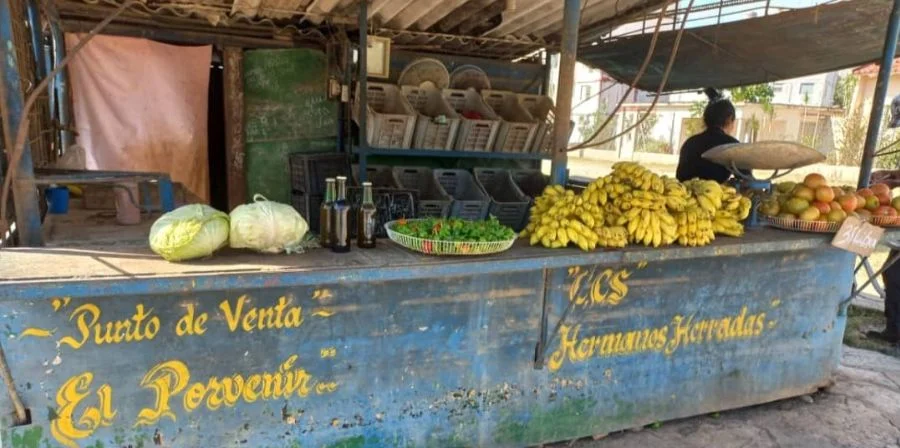
“With the informal rate, the disaster would be more serious,” he warned. And he is not exaggerating: the exchange rate of the informal market, which this Wednesday stands at 440 pesos per dollar, further pulverizes purchasing power. ECLAC classifies indigence as the inability to acquire essential foods. And for Monreal, millions of Cubans are already there. The fact that there are no official figures does not change reality.
When a country does not have official estimates but agrees to be included in the report, ECLAC uses national sources based on World Bank methodologies.
While Cuba remains silent, the rest of the continent shows lights and shadows with verifiable numbers. According to ECLAC25.5% of Latin Americans were in a situation of monetary poverty in 2024, some 162 million people, the lowest figure since comparable series exist. Extreme poverty stood at 9.8%, a reduction compared to the previous year, although still above 2014 levels. By 2025, the agency predicts a “slight reduction”, limited by the modest prospects for regional economic growth.
In contrast to these data, which allow us to evaluate and design policies, Cuba remains a statistical unknown. Monreal recalls that, when a country does not have official estimates but agrees to be included in the report, ECLAC uses national sources based on World Bank methodologies. This is the case with Brazil and its Brazilian Institute of Geography and Statistics.
The regional figures illustrate another painful contrast. In Latin America, despite persistent inequalities, there are improvements that make it possible to identify trends, measure impact and assign responsibilities. Mexico and Brazil, for example, explain a good part of the reduction in poverty in 2024. On the other hand, the Cuban economic model, focused almost entirely on the state sector – where the salary that Monreal uses as a reference is paid – produces a labor mass trapped between symbolic salaries and excessive inflation.
The systematic absence of Cuba in regional statistics confirms the Government’s will to hide poverty
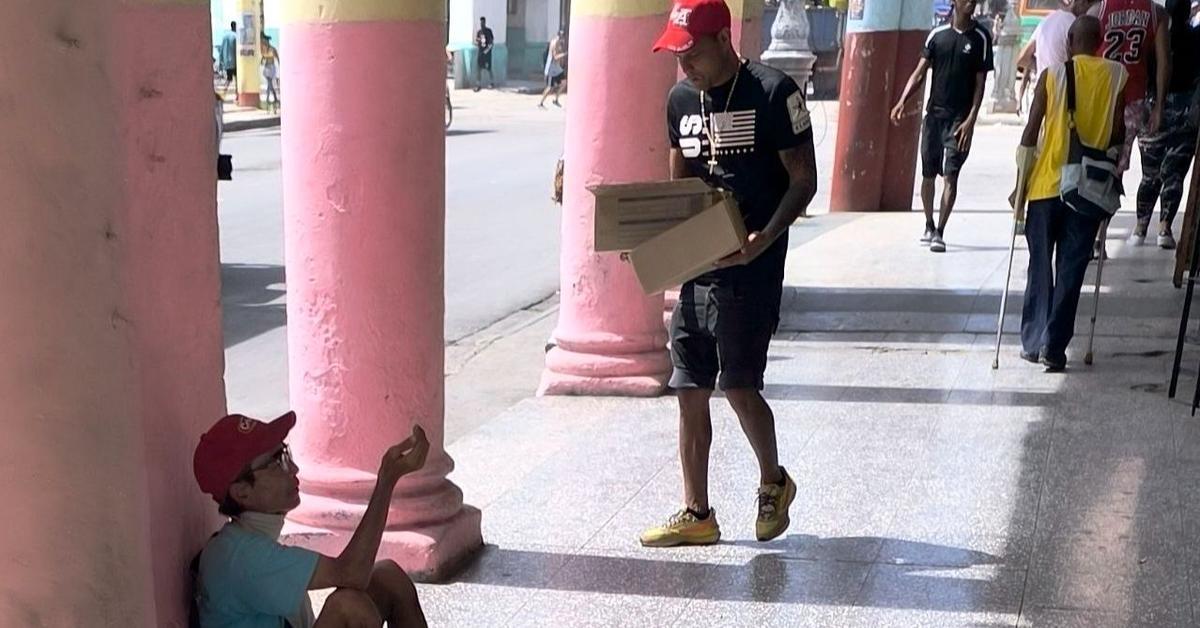
The tendency of the Cuban authorities to ignore poverty has reached such extremes that even the former Minister of Labor and Social Security, Marta Elena Feitó, went so far as to deny the reality on television. existence of beggars on the Island. Although she was removed from her position after the scandal generated by her statements, the systematic absence of Cuba in regional statistics confirms the Government’s will to hide poverty.
The Cuban economist’s diagnosis suggests that extreme poverty in Cuba is not a marginal or circumstantial phenomenon, but rather a structural and widespread one. And if the poverty line of $3.65 a day – another World Bank standard for lower-middle-income countries – were incorporated, the picture would be even more severe.
Meanwhile, ECLAC emphasizes that the region still lives as “the most unequal in the world”, with the richest 10% concentrating more than a third of the total income, and the poorest 10% barely reaching 1.7%. None of this is foreign to Cuba. But the difference is that other countries – with all their problems – measure, publish and discuss.